Main Courses
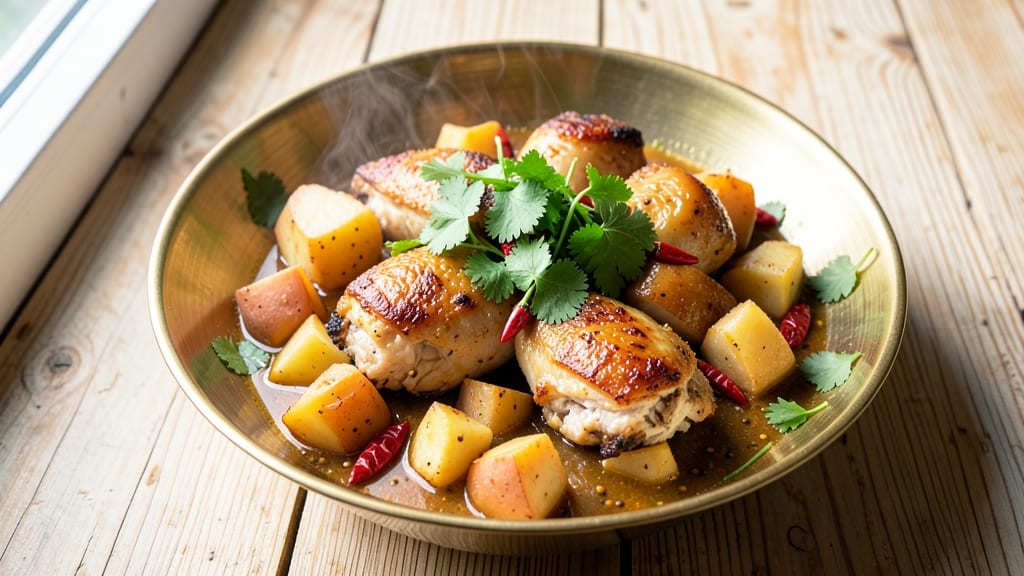
This aloo chicken salan recipe brings the rich flavors of South India to your kitchen with its perfect balance of tender chicken, hearty potatoes, and tangy tamarind.
The dish marries the earthy warmth of cumin and coriander with the bright acidity of tamarind, creating a stew that's both comforting and deeply satisfying. I've perfected this recipe over years of cooking, ensuring every bite delivers that signature South Indian taste you crave.
The magic lies in the marinade—a blend of yogurt, mustard seeds, and aromatic spices that tenderizes the chicken while infusing it with flavor. As the dish simmers, the potatoes absorb the rich, spiced broth, turning into a hearty, flavorful addition that makes this more than just a chicken stew.
The tamarind adds that signature tang, cutting through the richness and balancing the dish beautifully.
What you'll end up with is a restaurant-quality aloo chicken salan that's perfect for serving with steamed rice or warm parathas. The dish is rich in flavor, hearty enough to fill you up, and simple enough to make on a weeknight.
Each spoonful delivers layers of taste—spicy, tangy, and deeply aromatic—that transport you straight to a South Indian restaurant.
The best part? This recipe is versatile—adjust the spice level to your taste or add fresh cilantro for extra brightness. Whether you're cooking for family or treating yourself to a taste of home, this aloo chicken salan is sure to impress. Let's get started on creating this flavorful masterpiece.
Ingredients for aloo chicken salan
Tender chicken, hearty potatoes, and tangy tamarind—this South Indian stew delivers restaurant-quality flavor with just 15 ingredients.
| Ingredient | Amount | Notes |
|---|---|---|
| Chicken Thighs, Bone-In 🍗 | 1 ½ lb | Skin-on preferred for flavor |
| Yogurt, Plain 🥛 | ½ cup | Full-fat for best texture |
| Potatoes, Russet 🥔 | 2 lbs | Cut into 1-inch chunks |
| Tamarind Paste 🍈 | 3 tbsp | Adjust for tanginess |
| Mustard Seeds 🌿 | 1 tbsp | Whole, for tempering |
| Dried Red Chilies 🌶️ | 4 whole | Adjust for heat preference |
| Cumin Seeds 🌿 | 1 tbsp | Toasted for aroma |
| Curry Leaves 🌿 | ¼ cup | Fresh, packed |
| Ginger 🧄 | 2 tbsp | Freshly grated |
| Garlic Cloves 🧄 | 6 cloves | Minced finely |
| Onions 🧅 | 1 whole | Yellow, finely chopped |
| Tomatoes 🍅 | 2 whole | Medium, pureed |
| Cilantro Leaves 🌿 | ¼ cup | Fresh, chopped |
| Salt 🧂 | 1 ½ tsp | Adjust to taste |
| Turmeric Powder 🌶️ | 1 tsp | For vibrant color |
The chicken thighs are non-negotiable here—they stay juicy and flavorful while absorbing all those amazing spices. Look for bone-in thighs at your local Indian grocery or the butcher section; they add depth of flavor. For the tamarind, Trader Joe's or Whole Foods carry good quality paste, but if you can't find it, use 1 tbsp lemon juice plus 1 tsp sugar as a substitute. The potatoes should be firm and starchy—Russets or Yukon Golds work perfectly. Fresh curry leaves make all the difference, but if you can't find them, skip them entirely—this dish will still shine.
No tamarind paste? Lime juice plus a pinch of sugar gets you close, though it won't be exactly the same. Running out of yogurt? Substitute with coconut milk for creaminess, though the texture will differ slightly. The mustard seeds and cumin need to be toasted in oil first—that's where the magic happens. For the chilies, Kashmiri red chilies from an Indian market add color without too much heat, but any dried red chili will work. Fresh ginger and garlic are essential—never use powdered for this recipe. And if you're short on cilantro, fresh parsley works in a pinch.
This dish tastes even better the next day as all the flavors meld together. Store leftovers in an airtight container in the fridge for up to 5 days, or freeze for 3 months. I always make a double batch—it reheats beautifully and makes perfect lunches. The potatoes will soak up all that delicious broth, so don't be shy with the spices. And if you're serving with rice, basmati rice cooked with a pinch of cardamom takes this dish to the next level.
Why You'll Love This Recipe
- One-Pot Magic: I swear by this recipe because it’s all in one pot—no fussing with multiple pans or dishes. The chicken thighs stay juicy while the potatoes soften, and that tamarind-yogurt marinade does half the work for you. Honestly, I’ve made it on days when I couldn’t be bothered to wash another bowl.
- Tamarind Tang Kick: That little jar of tamarind paste? It’s the secret weapon. The tang cuts through the richness of the yogurt and chicken, balancing everything with a bright, almost citrusy punch. My husband always asks for seconds—even when he swears he’s “full.”
- Lunchbox Hero: This dish reheats like a dream, making it my go-to for meal prep. Pack it in containers for work or school, and it’ll still taste fresh hours later. Between us, it’s the only curry my kids will actually eat cold from the fridge.
- Budget-Friendly Feast: Bone-in chicken thighs stretch further than boneless, and russet potatoes are cheap but hearty. A single batch feeds four, and leftovers taste just as good the next day. I’ll be real: this is how I feed my family without breaking the bank.
Step-by-step instructions for South Indian potato and chicken stew
Here's how to create this aromatic, tangy dish that balances tender chicken and potatoes in a vibrant tamarind-infused broth.
Prepare the Chicken and Potatoes
Begin by cutting the 1.5 lb chicken thighs into 1-inch pieces, keeping the skin on for maximum flavor. Peel and cut the 2 lbs russet potatoes into 1-inch chunks—this size ensures even cooking without turning mushy. In a large bowl, combine the chicken and potatoes with the 0.5 cup plain yogurt, 1 tsp turmeric powder, and 1.5 tsp salt. Mix gently to coat evenly. Let this marinate for 15 minutes—this helps tenderize the chicken and infuse the potatoes with subtle spices.
While the chicken marinates, wash and dry the 0.25 cup curry leaves, then finely chop the 2 tbsp ginger and 6 cloves garlic. Peel and finely chop the 1 whole onion. These aromatics form the flavor foundation of your stew, so take your time with the prep.
Cook the Chicken to Perfection
Heat 2 tablespoons oil in a large, heavy-bottomed pot over medium-high heat. Add the 1 tbsp cumin seeds and let them sizzle for 30 seconds until fragrant. Add the 4 whole dried red chilies and 1 tbsp mustard seeds, stirring for another 30 seconds until the mustard seeds pop. This tempering step unlocks the dish's signature depth of flavor.
Add the marinated chicken and cook for 8-10 minutes, stirring occasionally, until the chicken turns opaque and slightly golden. Remove the chicken with a slotted spoon and set it aside temporarily. In the same pot, add the 1 whole finely chopped onion and sauté for 3-4 minutes until soft and translucent. Stir in the 2 tbsp ginger and 6 cloves garlic, cooking for another 1 minute until fragrant.
Build the Tangy Tamarind Base
Pour in 2 cups water and bring to a gentle boil. Add the 2 whole tomatoes (pureed or finely chopped) and the 3 tbsp tamarind paste, stirring well to dissolve. The tamarind will give your stew that signature tangy brightness. Let this simmer for 5 minutes until the tomatoes soften and the flavors meld together.
Return the chicken to the pot and add the 2 lbs potato chunks. Stir gently to coat everything in the tangy tomato-tamarind broth. Bring to a gentle simmer, then reduce heat to low. Cover and let it cook for 20-25 minutes, stirring occasionally, until the potatoes are fork-tender and the chicken is fully cooked through. The stew should have a thick, gravy-like consistency—if it's too thin, uncover and simmer for another 5 minutes to reduce.
Finish with Fresh Herbs and Garnish
Once the potatoes are tender and the chicken is cooked through, stir in the 0.25 cup chopped cilantro leaves. This adds a fresh, bright finish that cuts through the richness of the dish. Taste and adjust the seasoning with additional salt if needed. The tamarind paste should provide enough tang, but you can add a splash of water or lemon juice if you prefer more acidity.
Serve the aloo chicken salan hot, garnished with extra cilantro leaves and a drizzle of oil. The contrast of tender chicken, hearty potatoes, and the vibrant tamarind broth makes this dish incredibly satisfying. Pair it with steamed rice or warm roti for the full South Indian experience.
Pro Tips For Making Aloo Chicken Salan
- Marinate Chicken Overnight: I learned this the hard way—rushing the yogurt marinade leaves the chicken bland and tough. Bone-in thighs need at least 6 hours (overnight is ideal) to tenderize properly. Pat them very dry first—wet skin won’t absorb the yogurt, and you’ll end up with uneven cooking.
- Cut Potatoes Uniformly: Russet potatoes vary in size, but for even cooking, aim for 1.5-inch chunks cut into rough rectangles—not cubes. The flat sides crisp faster without falling apart, and they absorb the tamarind gravy better. (Yes, it’s tedious, but your dish will look professional.)
- Bloom Spices Hot: Mustard seeds and other whole spices need a screaming-hot pan to release their aroma properly. Wait until the oil shimmers (around 350°F/175°C) before adding them—if you skip this, they’ll just sit there, dull and underwhelming. (Your future self will notice the difference.)
- Simmer Tamarind Low: Tamarind paste burns faster than you’d think. Once you add it to the chicken gravy, reduce heat to low and let it bubble gently for 5 minutes—stirring constantly. If it darkens too quickly, dilute with a splash of water. (This isn’t the prettiest method, but it’s the tastiest.)
Common mistakes when making your aloo chicken salan
Overcooking the Chicken
One of the biggest mistakes is letting the chicken cook too long after it reaches 165°F internal temperature. The chicken turns rubbery and dry when it sits in the simmering liquid beyond this point.
I always remove the chicken after 8-10 minutes of initial cooking and set it aside until needed—this keeps it juicy. Use a meat thermometer to check doneness before returning it to the pot. 🌡️
Skipping the Tempering
Many home cooks rush the mustard seeds and cumin tempering step, but this is where the dish gets its depth. Let those seeds sizzle for 30-45 seconds until they pop and release their oils.
I've seen recipes where this step was skipped, and the final dish lacked that signature nutty aroma. Use a heavy-bottomed pot to prevent burning while toasting the seeds.
Using Wrong Potatoes
Not all potatoes are created equal! Waxy potatoes like red potatoes will turn mushy in this dish. Stick with russet or Yukon Gold potatoes—their starchy texture holds up perfectly.
I've tried this recipe with red potatoes, and the results were disappointing. Cut them into 1-inch chunks for even cooking without breaking apart.
Ignoring Tamarind Balance
The tamarind paste is what makes this dish special, but many people either underuse it or overdo it. Start with 3 tbsp and adjust to taste. If your tamarind paste is very concentrated (like Trader Joe's brand), you might need less.
I've had versions where people skipped it entirely, and the dish lacked that signature tangy brightness that cuts through the richness. 🍈
Not Marinating Long Enough
A quick 15-minute marinade in yogurt and spices is essential for tender chicken. I've seen people skip this step entirely, and the chicken ends up tough. The yogurt also helps balance the acidity of the tamarind.
If you're short on time, at least let the chicken sit with the marinade for 10 minutes—it makes a noticeable difference.
Overcrowding the Pot
Don't try to cook this entire recipe in a small pot. The chicken and potatoes need room to move and absorb the flavors. Use a large, heavy-bottomed pot that gives everything 1-2 inches of headspace.
I've had to start over when people used their smallest pot, and the chicken ended up steaming instead of browning properly. This also affects the cooking time—crowded pots take longer to heat evenly.
Nutrition facts
Frequently asked questions
Can I make this aloo chicken salan with boneless chicken?
Yes, but bone-in thighs give the dish richer flavor. If using boneless, reduce cooking time by 5 minutes since they cook faster. The skin adds crispiness—skip it if preferred, but you'll lose some texture. For best results, marinate pieces for 20 minutes instead of 15 to compensate for the lack of bone moisture.
How do I adjust the spice level for kids?
Reduce dried red chilies to 2 whole and remove seeds. For extra mildness, strain the broth before serving or serve the chicken and potatoes separately with plain rice. The tamarind's tang remains, but the heat disappears. Always let kids try a small bite first to check their preference.
Can I make this dish in an Instant Pot?
Sauté spices as directed, then add all ingredients except cilantro. Cook on high pressure for 8 minutes, followed by a 10-minute natural release. The potatoes may break down slightly more, so use Yukon Golds instead of russets. Finish with fresh cilantro and adjust consistency with water or broth if needed.
What's the best way to store leftovers?
Cool the stew completely, then store in an airtight container in the fridge for up to 5 days. For freezing, portion into containers with 1-inch headspace and freeze for 3 months. Reheat gently on low heat, adding 1-2 tbsp water if the gravy thickens too much. The flavors actually improve overnight!
Why does my salan taste bland?
Most likely, the tempering wasn't long enough or spices weren't toasted properly. Let mustard seeds pop and cumin sizzle for 45 seconds. Also check tamarind—use 1 extra tbsp if needed. For extra depth, add ½ tsp garam masala at the end. The yogurt marinade also needs time—don't skip the 15-minute rest before cooking.