Main Courses
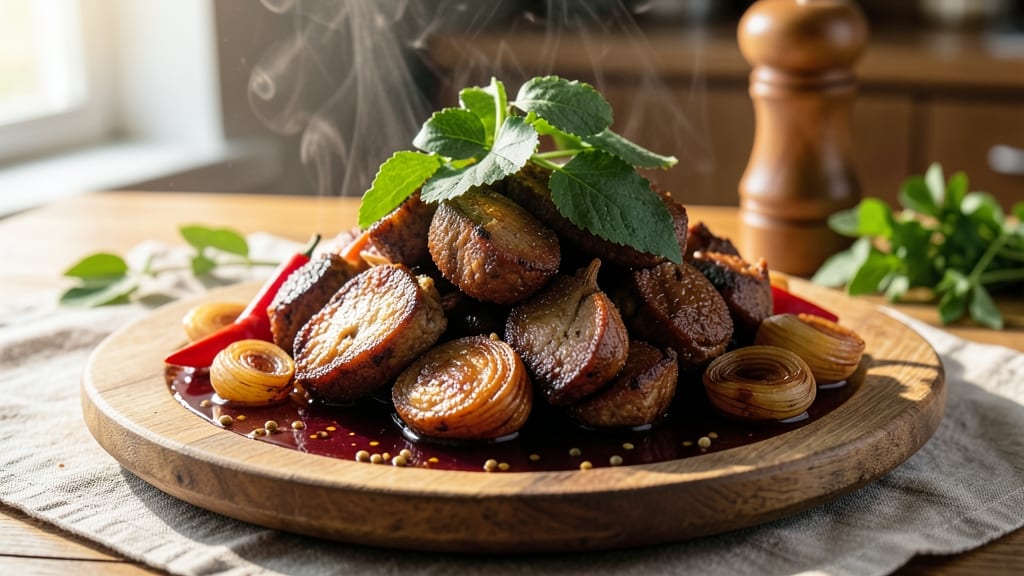
This Andhra Chicken Liver Fry delivers the bold, tangy-spicy crunch that defines South Indian street food. The secret lies in tamarind's sharp tang, curry leaves' earthy aroma, and perfectly fried livers that stay tender yet crisp at the edges.
I've perfected the cleaning and marinating process to ensure every bite is restaurant-quality without the guesswork.
What sets this dish apart is the balance of textures—crispy fried livers, crunchy shallots, and the slight chew of tamarind. The frying technique is critical: high heat for 3-4 minutes ensures a golden crust while keeping the interior juicy.
Traditional accompaniments like mint chutney or steamed rice complete the experience, but even on its own, this dish commands attention.
The preparation might sound intimidating, but breaking it into simple steps makes it accessible. Start with proper liver cleaning (a quick soak in salted water removes impurities), then marinate briefly in the spiced tamarind mixture. The frying happens in batches to maintain oil temperature, guaranteeing that signature crunch every time.
This recipe captures the essence of Andhra cuisine—spicy, tangy, and deeply flavorful—while being straightforward enough for home cooks. The result is a dish that's as impressive on a weeknight as it would be at a local restaurant. Let's get started on the authentic process.
Ingredients for andhra chicken liver fry
Authentic Andhra flavors start with these bold, tangy-spiced ingredients for crispy, restaurant-quality chicken liver fry.
| Ingredient | Amount | Notes |
|---|---|---|
| Chicken Livers 🍗 | 1 ½ lb | Fresh, cleaned and trimmed |
| Tamarind Paste 🍈 | ½ cup | Unadulterated, concentrated |
| Curry Leaves 🌿 | ¼ cup | Fresh, dried if unavailable |
| Shallots 🧅 | ½ lb | Thinly sliced, skin-on |
| Red Chili Powder 🌶️ | 2 tbsp | Kashmiri or cayenne preferred |
| Mustard Seeds 🌾 | 1 tbsp | Whole, toasted for aroma |
| Asafoetida (Hing) 🧂 | ¼ tsp | Pure, potent powder |
| Turmeric Powder 🧄 | ½ tsp | Freshly ground preferred |
| Cumin Seeds 🌿 | 1 tsp | Toasted for depth |
| Vegetable Oil 🫒 | 3 cups | High smoke point preferred |
| Salt 🧂 | 1 ½ tsp | Diamond Crystal kosher |
| Lemon Juice 🍋 | 1 tbsp | Freshly squeezed |
| Fresh Coriander Leaves 🌿 | ¼ cup | Chopped for garnish |
The chicken livers are the star—freshness is non-negotiable. Source them from a trusted butcher or specialty market (avoid pre-packaged livers, which often contain preservatives). Indian grocery stores carry the best quality, often pre-cleaned but still requiring a quick soak in salted water to remove any remaining impurities. Tamarind paste should be 100% pure, unadulterated—brands like Sai or Mysore are reliable. Curry leaves add that signature earthy aroma; dried leaves work in a pinch but fresh are ideal. For shallots, skin-on slices ensure they stay crisp during frying—peeling removes too much moisture.
No tamarind paste? Lemon juice plus a pinch of sugar mimics the tang, though the depth won’t be identical. Substitute curry leaves with dried thyme at half the amount, but the flavor profile shifts dramatically. Vegetable oil is critical—its neutral taste won’t overpower the spices, unlike olive oil, which can turn bitter at high heat. For the spice blend, toast the mustard and cumin seeds in a dry pan until fragrant (30 seconds) to unlock their full potential. The red chili powder should be Kashmiri for color or cayenne for heat—adjust to your spice tolerance. Preferring a milder dish? Swap half the chili powder for smoked paprika.
Livers keep best 1 day refrigerated in an airtight container, but use them immediately for optimal texture. Curry leaves and coriander stay fresh for 5 days wrapped in damp paper towels in the fridge. The tamarind paste lasts 6 months unopened and 3 months opened in the pantry. For leftovers, store fried livers in a sealed container with a paper towel to absorb excess oil—reheat in a skillet over medium heat for 2-3 minutes to restore crispiness. This dish is best served immediately, but the flavors develop beautifully over 24 hours as the spices meld.
Why You'll Love This Recipe
- No Chopping Chaos: The shallots go in whole—peeled, halved, and left to soften in hot oil. That’s it. No dicing, no fuss, just 10 minutes of hands-off magic while the tamarind and curry leaves work their flavor spell.
- Tamarind Tang Magic: Honestly, that first bite of crispy liver with the tamarind’s sharp, sticky punch is the thing. It’s not sweet—it’s bright, funky, and cuts through the richness like a wake-up call. The red chili powder? Just enough heat to make it sing.
- Crowd-Pleaser Flex: I’ve served this at book club (yes, really) and potlucks—vegetarians skip the livers, and everyone else dives in. It’s the kind of dish that feels special without needing a fancy occasion. Just toss in extra curry leaves if your guests are skeptical.
- Leftover Goldmine: The flavor actually deepens the next day. Reheat in a pan with a splash of water, and it’s like a second life—crispy again, with the tamarind clinging to every bite. My freezer’s full of these, and I never regret it. Budget win, too.
Step-by-step instructions for Andhra chicken liver fry
Master this authentic Andhra specialty with precise technique and bold flavors.
Prepare the Chicken Livers
Begin by cleaning the 1.5 lb chicken livers thoroughly under cold running water, removing any connective tissue or blood vessels. Pat them completely dry with paper towels—this ensures they brown properly rather than steam. Trim any large pieces of fat while leaving a thin layer to protect the meat during cooking.
Slice the cleaned livers into ¼-inch thick pieces for even cooking. Place them in a bowl and toss with 1 tbsp lemon juice and 1.5 tsp salt. Let them marinate for 15 minutes at room temperature. This acid treatment tenderizes the livers and enhances their natural flavor. Don't skip this step—it prevents them from becoming tough or bitter during frying.
Dry-Fry the Spice Blend
Heat 3 cups vegetable oil in a heavy-bottomed pan over medium heat until it reaches 350°F. In a small dry skillet, toast the 1 tsp cumin seeds and 1 tbsp mustard seeds until they begin to pop and release their aroma—about 30 seconds. Immediately add the 0.5 lb thinly sliced shallots and sauté for 3-4 minutes until golden brown.
Lower the heat to medium-low and stir in the 0.25 tsp asafoetida (hing), 0.5 tsp turmeric powder, and 2 tbsp red chili powder. Cook for another 1 minute until the spices release their oils and the mixture turns deep red. Remove from heat and set aside—this spice blend forms the flavor base for the fry.
Fry the Chicken Livers
Working in batches to avoid overcrowding, carefully add the marinated chicken liver pieces to the hot oil. Fry over medium-high heat for 2-3 minutes until they turn a rich golden brown color. Use a slotted spoon to remove them and drain on paper towels. The livers should be crisp on the outside while remaining tender inside—this balance is crucial for texture.
Return the fried livers to the pan with the spice blend. Add the 0.5 cup tamarind paste and 0.25 cup curry leaves, stirring gently to coat everything evenly. Cook for an additional 2 minutes until the tamarind dissolves and the flavors meld. The mixture should have a glossy sheen and a tangy aroma that signals proper integration.
Finish and Garnish
Transfer the liver mixture to a serving dish and let it rest for 5 minutes to allow the flavors to settle. Garnish with the 0.25 cup chopped fresh coriander leaves just before serving. The dish should have a vibrant red hue from the chili and tamarind, with crispy shallots adding texture contrast.
Serve immediately with steamed rice or appam to complement the rich, spicy flavors. The tamarind provides a perfect balance to the heat, while the curry leaves add an aromatic depth that defines Andhra cuisine. Each bite should deliver a harmonious blend of crispy, spicy, and tangy elements.
Pro Tips For Making Andhra Chicken Liver Fry
- Blanch Livers First: Dump your chicken livers in a pot of boiling water for 30 seconds, then shock in ice water. This removes the bitter blood and lets them absorb flavors better—no more rubbery, gamey results. (Yes, it’s an extra step, but your taste buds will notice.)
- Use Raw Tamarind Paste: Skip the pre-diluted stuff—mix your tamarind paste with water yourself (about 1:1 ratio) and strain out the pulp. The fresh acidity cuts through the richness of the livers and balances the heat. I learned this the hard way when a jarred version made my dish taste like syrup.
- Don’t Overcrowd the Pan: Fry the livers in batches if needed—packing them in will steam them instead of sear. A hot, crowded pan turns them greasy, not crisp. Two minutes per side max, until golden. (Your future self will thank you for not rushing this.)
- Toast Shallots Slow: Sauté your shallots on low heat for 8-10 minutes until deep golden, not brown. High heat burns them before they soften, and you’ll end up with bitter bits instead of sweet, jammy flavor. Patience here makes the whole dish sing.
Flavor customization for this recipe
Spice Level Control
Adjust the heat to your preference by modifying the red chili powder. For a mild version, reduce to just 1 tbsp and add ½ tsp smoked paprika for depth without the burn.
If you love spice, increase to 3 tbsp chili powder and add ½ tsp cayenne pepper for extra kick. I find Kashmiri chili powder adds vibrant color while keeping the heat moderate—perfect for first-timers. 🌶️
Tamarind Tang Adjustments
The tamarind paste is the soul of this dish, but its intensity varies by brand. Start with ½ cup and taste—if it's too sour, balance with ½ tsp sugar or a pinch of salt. For a sweeter profile, add 1 tbsp jaggery (palm sugar) while frying.
I once used lemon juice + 1 tsp sugar as a substitute and was surprised how well it mimicked tamarind's tang, though it lacked depth.
Texture Variations
For extra crunch, add ¼ cup roasted peanuts or crushed papad at the end. If you prefer softer livers, reduce frying time to 1 minute 30 seconds and keep the oil temperature at 325°F.
My go-to trick for restaurant-style texture is to fry the livers once, drain them, then give them a second quick fry in the same oil with the spice blend—this creates a double-layered crispiness.
Regional Flavor Twists
In coastal Andhra, they often add grated coconut and dried kokum for a fruity tang. For a Karnataka twist, swap tamarind for 1 tbsp amchur (dried mango powder) and add ½ tsp fennel seeds to the spice blend.
I experimented with adding 1 tsp garam masala at the end for warmth, which worked beautifully with the tamarind's acidity.
Vegetarian Adaptation
Replace chicken livers with 1.5 lb firm tofu or mushrooms (like oyster or king oyster) for a meat-free version. Press tofu to remove excess water, then cube and marinate in the same spice blend.
Fry until golden and toss with tamarind and curry leaves. The texture won't be identical, but the flavors translate surprisingly well—especially with mushrooms, which absorb the spices deeply. 💛
Nutrition facts
Frequently asked questions
Why do I need to marinate the chicken livers before frying?
The 15-minute lemon juice and salt marinade serves two critical purposes: it tenderizes the livers by breaking down proteins and removes any metallic bitterness. This acid treatment also helps create a better crust during frying, preventing them from becoming tough or rubbery. Never skip this step—it's what transforms good livers into restaurant-quality bites!
Can I use beef or pork livers instead of chicken livers?
While beef or pork livers can work, they require longer marinating (30+ minutes) and slightly lower frying temperatures (325°F) to prevent toughness. Chicken livers are preferred in Andhra cuisine because their milder flavor and delicate texture pair perfectly with the tangy-spicy tamarind blend. Beef livers will be richer but may overpower the dish's balance.
What's the secret to getting crispy livers without burning them?
Maintain oil temperature at 350°F and fry in small batches—overcrowding lowers the temperature and causes steaming. Use a deep, heavy pan and a thermometer for accuracy. The livers should sizzle immediately upon contact and turn golden in 2-3 minutes. If they brown too quickly, reduce heat slightly next time.
Can I make this dish ahead of time?
Fresh is best, but you can prepare components in advance: marinate the livers up to 4 hours ahead and store the spice blend separately. For leftovers, reheat fried livers in a skillet over medium heat for 2-3 minutes with a splash of water to restore crispiness. The tamarind sauce can be made 1 day ahead and reheated gently before combining with the livers.
What's the best way to serve Andhra Chicken Liver Fry?
Traditionally served with steamed rice or appam to balance the rich flavors. For extra authenticity, pair with mint chutney or coconut chutney—the cool contrast enhances the spicy-tangy profile. In Andhra homes, it's often enjoyed with a cold kingfisher beer or neer (buttermilk)** to cool the palate.