Main Courses
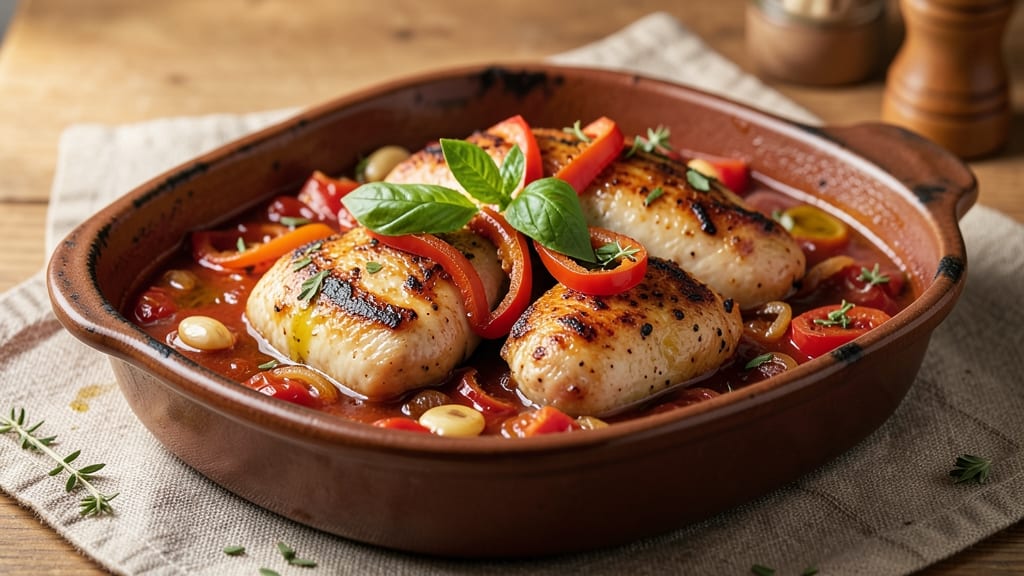
This baked boneless chicken cacciatore transforms simple ingredients into a restaurant-worthy Italian classic that's rich with tomato-braised flavors and aromatic herbs. The secret lies in slow-cooked tenderness—chicken simmered until fork-tender in a vibrant sauce of tomatoes, bell peppers, and garlic, all while developing deep, caramelized notes.
I've perfected this technique to deliver authentic Italian taste without the fuss of traditional braising methods.
The recipe begins with searing the chicken to lock in juices, then building layers of flavor through sautéed vegetables and herbs before adding a robust tomato base. A 30-minute active prep time leads to 1 hour 15 minutes of hands-off baking, making it ideal for weeknight dinners that feel special.
The result is succulent chicken pieces nestled in a velvety sauce with just the right balance of sweetness and acidity.
This dish pairs beautifully with crusty bread to soak up every last drop of sauce or alongside a simple arugula salad for brightness. The herbs—oregano, thyme, and basil—infuse the sauce with their signature Mediterranean aroma, while the bell peppers add a subtle sweetness that rounds out the dish.
Whether you're serving it for a family dinner or a cozy night in, this recipe delivers the comforting flavors of Italy with minimal effort.
The beauty of this baked cacciatore is its versatility—it reheats beautifully for leftovers, making it perfect for meal prep. The sauce thickens slightly as it cools, clinging to the chicken and vegetables for that restaurant-quality experience.
Let's get started on creating this timeless Italian masterpiece that's sure to become a staple in your recipe rotation.
Ingredients for baked boneless chicken cacciatore
Authentic Italian flavors start with these carefully chosen ingredients for perfect baked boneless chicken cacciatore.
| Ingredient | Amount | Notes |
|---|---|---|
| Boneless Chicken Thighs 🍗 | 1 ½ lb | Trimmed of excess fat, cut into even pieces |
| Extra-Virgin Olive Oil 🫒 | ½ cup | High-quality, fruity variety preferred |
| Yellow Onion 🧅 | 1 whole | Medium size, finely chopped |
| Red Bell Pepper 🍅 | 1 whole | Medium size, sliced into strips |
| Garlic Cloves 🧄 | 4 cloves | Fresh, minced finely |
| Canned San Marzano Tomatoes 🍅 | 28 oz | Crushed or diced, high-quality |
| Dry White Wine 🍷 | ½ cup | Bold, dry variety like Pinot Grigio |
| Chicken Broth 💧 | ½ cup | Low-sodium preferred |
| Fresh Basil Leaves 🌿 | ¼ cup | Packed, chopped finely |
| Fresh Oregano Leaves 🌿 | ¼ cup | Packed, chopped finely |
| Fresh Thyme Sprigs 🌿 | ½ oz | About 6 sprigs, leaves only |
| Salt 🧂 | 1 ½ tsp | Diamond Crystal kosher salt |
| Ground Black Pepper 🌶️ | ½ tsp | Freshly ground preferred |
| Red Wine Vinegar 🍋 | 1 tbsp | For brightness |
| All-Purpose Flour 🌾 | 1 tbsp | For thickening sauce |
The quality of your tomatoes and herbs makes all the difference. San Marzano tomatoes are non-negotiable—their sweetness and low acidity create the perfect base. For the herbs, fresh is essential, though dried oregano and thyme at one-third the amount work in a pinch. I always shop for herbs at Whole Foods or my local Italian market, where they're vibrant and packed with flavor. The chicken thighs should have good marbling for juiciness—Oregon Tilapia Farms or Bell & Evans are reliable brands for quality.
No white wine? Substitute extra chicken broth with a splash of red wine vinegar—it adds the same acidity without the alcohol. Short on fresh basil? Dried basil at half the amount works, though fresh gives that signature aroma. The red bell pepper can be swapped for green if needed, but yellow adds subtle sweetness. For the flour, King Arthur All-Purpose is my go-to—it thickens beautifully without altering the sauce's flavor. If you're using pre-minced garlic, toast it first in olive oil to deepen its flavor.
This dish tastes even better the next day as flavors meld. Store leftovers in an airtight container in the fridge for up to 4 days. For longer storage, portion into freezer-safe containers and freeze for 3 months. The sauce will thicken as it cools—simply add a splash of chicken broth to loosen it when reheating. I always make extra sauce to freeze separately for quick pasta nights later.
Why You'll Love This Recipe
- I’ll be real: this recipe is my secret weapon for meal prep. The leftovers reheat beautifully, whether you’re packing it for work or feeding a crowd. The chicken stays juicy, the peppers add crunch, and it’s way more exciting than another sad sandwich—no one will guess it’s from last night’s dinner.
- One-Pan Magic: Between us, this dish is that recipe where you toss everything on a sheet pan and walk away. No chopping boards, no messy sauces—just the chicken, peppers, onions, and garlic all baking together until the thighs are tender and the peppers caramelize into sweet, sticky pockets of flavor.
- Garlic Bomb: Honestly, the moment that garlic starts sizzling in the olive oil? My kitchen smells like a Tuscan trattoria, and it’s all thanks to those few cloves. The slow bake lets the aroma seep into the chicken, turning it into something dangerously addictive—especially when paired with that bright, tangy tomato finish.
- Lunchbox Hero: I’ll be real: this recipe is my secret weapon for meal prep. The leftovers reheat beautifully, whether you’re packing it for work or feeding a crowd. The chicken stays juicy, the peppers add crunch, and it’s way more exciting than another sad sandwich—no one will guess it’s from last night’s dinner.
Step-by-step instructions for baked boneless chicken cacciatore
Master this classic Italian technique for tender chicken bathed in rich tomato-herb sauce.
Sear the Chicken for Maximum Flavor
Preheat your oven to 375°F. Heat 0.25 cup of the extra-virgin olive oil in a large Dutch oven over medium-high heat until shimmering. Pat the boneless chicken thighs dry with paper towels—this ensures a proper sear. Working in batches if needed, add the chicken to the pot in a single layer, leaving space between pieces. Cook undisturbed for 4-5 minutes until golden brown on one side, then flip and repeat on the second side. Remove the chicken and set aside on a plate.
Here's the thing—don't crowd the pan. If you have to work in batches, that's fine, but each piece needs room to develop that beautiful crust. The seared exterior will lock in juices during the baking process, preventing dryness. The chicken should release easily from the pan when ready to flip—if it sticks, let it cook another 30 seconds before attempting to turn.
Build the Aromatic Base
In the same Dutch oven, add the remaining 0.25 cup extra-virgin olive oil. Toss in the finely chopped yellow onion and red bell pepper strips. Cook over medium heat for 5-6 minutes until the onions soften and the peppers begin to caramelize at the edges. Add the minced garlic cloves and cook for another 30 seconds until fragrant—don't let it brown or it'll turn bitter.
This step develops the foundational flavors of the dish. The onions should be translucent with just a hint of color, and the peppers should maintain their shape while softening. If your pan gets too dry before the vegetables are ready, add 1 tablespoon of water and stir to deglaze, scraping up any browned bits from the bottom of the pot.
Deglaze and Simmer the Tomato Sauce
Pour in the 0.5 cup dry white wine and scrape vigorously with a wooden spoon to release all the browned bits from the bottom of the pot. Let the wine simmer for 2-3 minutes until reduced by half. Stir in the 28 oz canned San Marzano tomatoes, 0.5 cup chicken broth, 1 tbsp red wine vinegar, 1.5 tsp salt, and 0.5 tsp ground black pepper. Bring to a gentle simmer.
Here's where the magic happens: the wine reduction intensifies the flavors while the tomatoes begin to break down. Let the mixture simmer uncovered for 10 minutes, stirring occasionally. You want the sauce to thicken slightly and develop a rich, concentrated tomato flavor. If it reduces too quickly, add 2 tablespoons of water to maintain the proper consistency.
Finish with Herbs and Thicken the Sauce
Return the seared chicken to the Dutch oven, nestling it into the tomato sauce. Sprinkle the chopped fresh basil leaves, oregano leaves, and thyme sprigs over the top. Stir in the 1 tbsp all-purpose flour to thicken the sauce. Cover the pot with a lid and transfer to the preheated 375°F oven. Bake for 30-35 minutes until the chicken reaches an internal temperature of 165°F and the sauce has thickened to a glossy consistency.
The flour acts as a natural thickener, but don't worry if the sauce isn't perfectly thick when you remove it from the oven. You can always adjust the consistency later by simmering it uncovered for another 5 minutes to reduce further. The herbs should infuse their aromatic qualities into the sauce during this baking time, creating that signature Italian flavor profile.
Rest and Serve with Perfect Texture
Remove the chicken from the oven and let it rest in the sauce for 10 minutes before serving. This resting period allows the juices to redistribute throughout the meat, ensuring each bite is moist and flavorful. Taste the sauce and adjust seasoning if needed—you might need to add a pinch more salt or a splash of red wine vinegar for brightness.
Serve the chicken cacciatore immediately over crusty bread or polenta, ensuring each serving gets a generous ladle of that rich tomato-herb sauce. The chicken should be tender with juicy, flavorful meat that falls apart easily, while the sauce clings beautifully to each bite. The combination of sweet tomatoes, aromatic herbs, and perfectly seared chicken creates a dish that's both comforting and sophisticated.
Pro Tips For Making Baked Boneless Chicken Cacciatore
- SEAR THIGHS FIRST: After tossing the chicken thighs in olive oil and seasoning, hit them with a quick 3-4 minute sear in a screaming-hot skillet before baking. I used to skip this, thinking the oven would handle it—wrong. That initial crust locks in flavor and keeps the meat juicy when it braises later. (Yes, even if you’re impatient like me.)
- CHOP ONIONS SMALL: Dice that yellow onion into ¼-inch pieces—no bigger. I learned this the hard way when my cacciatore had chewy onion chunks instead of silky, flavorful bits. Small pieces cook faster and melt into the sauce instead of sitting like rocks. (Your future self will thank you.)
- DON’T OVERCROWD THE PAN: If you’re baking in one sheet, spread the chicken thighs in a single layer with space between them. I once crammed six thighs into a 9x13 pan and ended up with steam-cooked, soggy results. Tight quarters = uneven cooking. Give them room to breathe.
- SAUTE PEPPERS LAST: Roast the bell pepper strips in the oven first (they soften in 15 minutes at 400°F), then finish them in the skillet with the onions and garlic. Sounds weird, but it works: the oven preps them, and the stovetop adds char. Skip this, and you’ll have bland, rubbery peppers.
Flavor customization for this dish
Herb Intensity Boost
For a more pronounced herb flavor, double the fresh basil and oregano to 0.5 cup each and add 1 tbsp fresh rosemary chopped. The rosemary adds piney depth that pairs beautifully with the tomatoes.
I find Whole Foods Market's fresh herb blend works perfectly—just chop it finely and stir it in during the final 10 minutes of baking to preserve its aroma. 🌿
Spicy Kick Options
Add heat with 1-2 tbsp Calabrian chili paste when deglazing the pan with wine, or stir in 1 tsp red pepper flakes with the tomatoes. For a smoky twist, include ½ tsp smoked paprika when building the aromatic base.
I like to serve spicy versions with extra-crispy garlic bread to balance the heat.
Sweet Variations
Balance the acidity by adding 2 tbsp tomato paste when building the sauce base, or stir in ½ cup diced pineapple (drained well) with the tomatoes. The pineapple works surprisingly well with the Italian flavors—it adds a subtle sweetness that rounds out the dish.
I've also had success with 1 tbsp honey stirred into the sauce during the final 5 minutes of baking.
Umami Enhancements
Elevate the depth with 2 tbsp soy sauce or 1 tbsp fish sauce (just a splash!) when adding the tomatoes. For a vegetarian-friendly option, use 1 tbsp mushroom powder mixed into the flour.
The umami boost makes the dish even more satisfying—especially when paired with a crisp white wine like Pinot Grigio. 🍷
Creamy Twist
For a richer sauce, stir in ¼ cup heavy cream or ½ cup ricotta cheese during the final 10 minutes of baking. The creaminess contrasts beautifully with the acidity of the tomatoes. I recommend using full-fat cream for the best texture, and it pairs perfectly with crusty bread for dipping.
Regional Adaptations
For a Tuscan-inspired version, add ½ cup chopped sun-dried tomatoes (oil-packed) with the fresh tomatoes. In Sicily, you might include 1 tbsp capers and 2 anchovy fillets** (finely chopped) for a briny contrast.
Both versions maintain the dish's core flavors while offering exciting new dimensions. The capers and anchovies add a salty punch that balances the sweetness of the tomatoes beautifully. 🗺️
Nutrition facts
Frequently asked questions
Can I use chicken breasts instead of thighs?
Chicken breasts will work, but they require extra care to stay moist. Use 1 lb of breasts, pounded to ½-inch thickness, and reduce baking time to 20-25 minutes (until 165°F internal temp). Add 2 tbsp chicken broth to the sauce during baking to prevent drying. For best results, marinate breasts in olive oil, garlic, and herbs for 30 minutes before cooking.
How do I prevent the sauce from getting too watery?
Simmer the sauce uncovered for 5-10 minutes after removing from the oven to reduce excess liquid. For extra thickness, stir in 1 tbsp cornstarch mixed with 2 tbsp water during the final 5 minutes of baking. The flour already in the recipe helps, but this method works if your sauce is particularly thin.
Can I make this dish ahead of time?
This dish tastes even better the next day. Let it cool completely, then refrigerate in an airtight container for up to 4 days. Reheat gently in a saucepan with 2 tbsp water to loosen the sauce. For freezing, portion into containers and freeze for up to 3 months. Thaw overnight in the fridge before reheating.
What's the best way to serve this dish?
Serve with crusty Italian bread for dipping or creamy polenta to soak up the sauce. A simple arugula salad with lemon vinaigrette adds freshness. For a complete meal, pair with roasted potatoes or fresh focaccia. The sauce's richness pairs beautifully with bold red wines like Chianti or Sangiovese.
Why did my chicken turn out dry?
Overcooking is the most common cause. Use a meat thermometer to check for 165°F internal temp. If using breasts, don't exceed 25 minutes of baking time. For extra moisture, add 2 tbsp broth to the sauce during baking. Also ensure your chicken is properly patted dry before searing to create a flavorful crust that locks in juices.