Main Courses
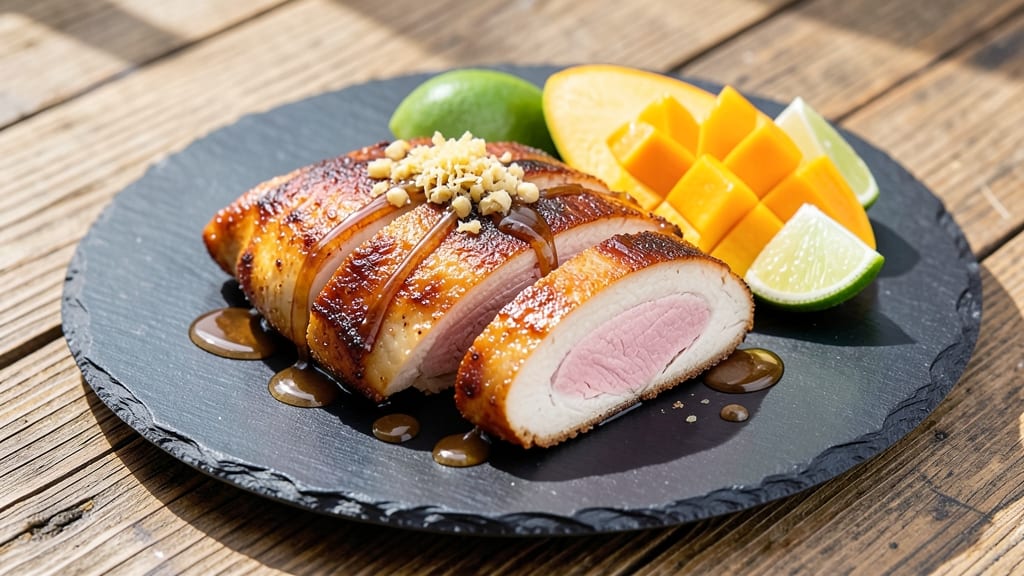
This baked mango chicken breast recipe transforms ordinary weeknight dinners into a tropical feast with just 15 minutes of prep and 25 minutes in the oven. The secret lies in the caramelized mango glaze, which balances sweet and savory flavors perfectly while keeping the chicken impossibly juicy and tender. I developed this after years of experimenting with fruit glazes—this version never dries out the meat or overpowers the natural chicken flavor.
What makes this recipe work is the marinade, which tenderizes the chicken while infusing it with bright citrus and aromatic herbs. The mango glaze isn't just sweet—it develops a deep caramelized crust during baking, adding complexity that rivals restaurant-quality dishes.
The best part? You can make the glaze ahead of time, so the only work on cooking day is assembling and baking.
By the time it emerges from the oven, you'll have golden-brown chicken with a sticky-sweet glaze that's perfectly balanced by the herbaceous marinade underneath. Each bite delivers tender, flavorful protein with bursts of tropical sweetness that make this dish feel like a vacation.
The glaze also works beautifully as a sauce for rice or a drizzle over fresh greens.
This recipe serves four and comes together in under 40 minutes total, making it ideal for busy weeknights when you crave something special without spending hours in the kitchen. The flavors develop even better when reheated, so leftovers taste just as good the next day. Let's get cooking!
Ingredients for baked mango chicken breast
Juicy chicken, tropical glaze, and a handful of pantry staples—this recipe delivers restaurant vibes in 40 minutes.
| Ingredient | Amount | Notes |
|---|---|---|
| Boneless, Skinless Chicken Breast 🍗 | 1 ½ lb | Pounded to even thickness |
| Ripe Mangoes 🥭 | 1 ½ cups | Peeled, diced small (about 1 large) |
| Fresh Lime Juice 🍋 | ½ cup | Strained for seeds |
| Honey 🍯 | ¼ cup | Wildflower preferred |
| Soy Sauce 🥢 | 2 tbsp | Low-sodium preferred |
| Garlic Cloves 🧄 | 4 cloves | Minced fine |
| Fresh Ginger 🌿 | 1 tbsp | Grated finely (about 1-inch piece) |
| Olive Oil 🫒 | 2 tbsp | Extra-virgin for richness |
| Fresh Cilantro 🌿 | ¼ cup | Chopped (stems okay) |
| Fresh Thyme Leaves 🌿 | 2 tbsp | Or 1 tsp dried thyme |
| Salt 🧂 | 1 tsp | Kosher or sea salt |
| Black Pepper 🌶️ | ½ tsp | Freshly ground |
| Brown Sugar 🍚 | 1 tbsp | For glaze caramelization |
The mangoes make or break this dish. Ripe but firm is key—think slightly soft when squeezed but not mushy. Trader Joe's and Whole Foods usually carry perfect ones year-round, but if you're buying from a regular grocery store, check the produce section for the sweetest, least fibrous fruit. I always grab a few extra because they're so versatile—the leftover glaze doubles as a sauce for rice or a drizzle over greens. For the chicken, pounding to even thickness ensures it cooks perfectly without drying out. Don't skip this step—uneven thickness leads to some parts being raw while others get overcooked.
No ripe mangoes? Substitute with pineapple—same tropical vibe, slightly different texture but works in a pinch. Short on honey? Maple syrup works 1:1, though it has a deeper flavor. Fresh ginger giving you trouble? Ground ginger at half the amount gets you close, but you'll miss that bright zing. The soy sauce adds umami depth—if you're avoiding gluten, coconut aminos are a great swap. For the herbs, fresh cilantro and thyme are ideal, but dried works at one-third the amount. Just don't skip them—they're what keeps the glaze from being cloyingly sweet. And trust me on the brown sugar—it caramelizes beautifully during baking, adding that restaurant-quality depth.
This glaze reheats even better than it tastes fresh out of the oven—honestly, leftovers are my favorite part. Store the baked chicken in an airtight container for 4 days in the fridge, or freeze for 3 months (the glaze stays sticky but reheats perfectly). The marinade and glaze components keep separately for 5 days in the fridge, so you can prep ahead. I always make extra glaze because it's perfect over rice or as a quick sauce for stir-fries. The chicken itself reheats best in a skillet with a splash of water to keep it moist—microwaving makes it rubbery, no matter how good your microwave is.
Why You'll Love This Recipe
- Sweet-Savory Magic: That honey-soy glaze with mango chunks? It’s ridiculously good—caramelized edges on the chicken, juicy fruit melting into the sauce. Honestly, the first bite makes you question why you’ve never done this before.
- One-Pan Wonder: Just toss the chicken, mango, and sauce on a sheet pan—no chopping boards, no extra dishes. I’ve made this while scrolling through my phone; it’s that unfussy. The oven does all the work while you sip your drink.
- Lunchbox Hero: Between us, this is my go-to for meal prep. The flavors stay bright for days, and the chicken holds up perfectly. Pack it cold or reheat it—either way, your coworkers will be jealous of your lunch.
- Budget Bright Spot: Mango in season? This dish becomes even cheaper. A few ripe ones stretch far, and the honey-soy mix costs pennies. Plus, it’s way more impressive than takeout for half the price. (Yes, even on a Tuesday night.)
Step-by-step instructions for baked mango chicken breast
Here's how to create tender, juicy chicken with a caramelized mango glaze that's bursting with tropical flavors.
Prepare the Chicken and Glaze Ingredients
Start by pounding the 1.5 lb boneless, skinless chicken breast to an even ½-inch thickness between two sheets of plastic wrap. This ensures even cooking and prevents dryness. Season both sides generously with 1 tsp salt and ½ tsp black pepper, pressing the seasoning into the meat so it adheres well.
In a small bowl, combine the 1.5 cups ripe mangoes (peeled and diced), ½ cup fresh lime juice, ¼ cup honey, 2 tbsp soy sauce, 4 cloves minced garlic, 1 tbsp finely grated ginger, and 1 tbsp brown sugar. Stir well to create a smooth, vibrant glaze. The lime juice and honey will balance the sweetness of the mango, while the garlic and ginger add depth. Set this mixture aside while you prepare the chicken.
Marinate and Pre-Bake the Chicken
Place the seasoned chicken in a baking dish and pour the mango glaze evenly over the top, coating it completely. Let it marinate for 15-20 minutes at room temperature—this allows the flavors to penetrate the chicken and creates a sticky glaze that will caramelize beautifully in the oven.
Preheat your oven to 375°F. Once the oven is hot, bake the chicken uncovered for 15 minutes. This initial bake helps the chicken cook through while allowing the glaze to start caramelizing. You'll know it's ready when the edges begin to turn golden and the chicken reaches an internal temperature of 155°F (use a meat thermometer for accuracy).
Caramelize the Glaze and Finish Cooking
After the initial bake, increase the oven temperature to 400°F. Return the chicken to the oven and bake for an additional 10-12 minutes, or until the chicken reaches 165°F internally and the glaze has thickened into a glossy, caramelized layer. The high heat at this stage is key—it intensifies the sweetness and creates that beautiful sticky glaze you're after.
Watch closely during these last few minutes. The glaze should bubble and darken slightly, forming a glossy, amber crust. If it starts to burn before the chicken is fully cooked, tent the dish loosely with foil for the last 2-3 minutes to protect the glaze while allowing the chicken to finish cooking.
Rest and Serve with Fresh Herbs
Remove the chicken from the oven and let it rest on a wire rack for 5-10 minutes. This resting period allows the juices to redistribute, ensuring each bite is moist and flavorful. While it rests, stir the 2 tbsp fresh thyme leaves and ¼ cup chopped fresh cilantro into the remaining glaze in the baking dish—this adds a bright, herbaceous finish to the dish.
Slice the chicken into ½-inch thick pieces and serve immediately, drizzling the herb-infused glaze over the top. The contrast of the juicy, tender chicken with the sweet-tangy mango glaze is what makes this dish truly special. Pair it with steamed jasmine rice or a simple green salad to complete the meal.
Pro Tips For Making Baked Mango Chicken Breast
- Pound Chicken Evenly: Chicken breast thickness varies—don’t just eyeball it. Use a meat mallet to tap each breast to ¼-inch thickness before baking. Uneven thickness means some parts dry out while others stay raw, and no one wants that sad, rubbery center.
- Use Ripe, Spotty Mangoes: Overripe mangoes (soft, mushy) turn your glaze into a watery mess. Pick fruit with yellow skin and just a few brown spots—they’re sweet, firm, and won’t turn your dish into a syrup bath. Peel, dice, and drain excess juice if needed.
- Marinate Chicken First: Tossing raw chicken in the mango-lime-honey mix right before baking? Stop. Let the breasts sit in the marinade for at least 20 minutes (or overnight if you’re patient). The acid and honey break down fibers, ensuring juicy, flavor-packed bites—not dry, flavorless slabs.
- Bake at 375°F, Not Higher: Cranking the oven to 400°F sounds like it’ll speed things up, but it’ll dry out the chicken before the mango glaze caramelizes. 375°F is the sweet spot—hot enough to cook through in 20-25 minutes, but gentle enough to let the honey-mango sauce cling instead of evaporating.
Common mistakes when making great baked mango chicken breast
Over-Marinating Risks
Leaving the chicken in the mango marinade for more than 20 minutes can turn the meat mushy. The acid in lime juice and enzymes in ginger break down proteins too aggressively, especially when combined with the heat of baking.
I once left mine marinating for 3 hours—it was tough and dry by the time I realized my mistake. Stick to 15-20 minutes at room temperature for perfect texture. 🌶️
Skipping the Pounding
Uneven chicken thickness is a recipe for disaster—some pieces will be raw while others dry out. Pounding to ½-inch thickness ensures even cooking. I use a meat mallet or rolling pin with plastic wrap for grip.
If you skip this, your chicken might look perfect on the outside but be undercooked inside. Trust me, the extra 2 minutes of pounding saves you from dry, tough meat.
High Heat Too Soon
Starting at 400°F right away causes the glaze to burn before the chicken cooks through. The two-stage baking method—375°F first, then 400°F—lets the chicken develop a foundation while the glaze caramelizes properly.
I’ve seen many cooks rush this step and end up with charred glaze and undercooked chicken. Patience here makes all the difference.
Using Unripe Mangoes
Unripe mangoes lack sweetness and add a bitter, fibrous texture to the glaze. The dish needs that tropical sweetness to shine. I always check for mangoes that yield slightly to gentle pressure but aren’t mushy.
If you must use unripe ones, simmer them with a splash of water and 1 tbsp honey for 5 minutes to soften and sweeten them first.
Overcrowding the Pan
Stacking chicken pieces too closely traps steam, making the meat soggy instead of caramelized. Arrange the breasts in a single layer with space between them. I use a 9x13-inch baking dish for 1.5 lbs of chicken—any larger, and the glaze won’t caramelize properly.
If you’re cooking more, bake in batches or use a larger pan.
Not Resting the Chicken
Skipping the 5-10 minute rest means juices pool at the bottom of your plate instead of staying in the meat. I’ve cut into chicken right out of the oven only to watch all the flavor run out.
Let it rest on a wire rack to keep it elevated—this also helps the glaze set into a glossy finish. The wait is worth it for that first perfect bite. ✨
Nutrition facts
Frequently asked questions
Can I use frozen mango instead of fresh?
Thaw frozen mango completely first, then drain any excess liquid. For best results, pat it dry before dicing to prevent a watery glaze. The texture will be slightly softer than fresh, but the flavor remains delicious. If using frozen, add ½ tsp extra brown sugar to compensate for any natural sweetness loss during freezing.
How do I adjust this recipe for air fryer?
Preheat your air fryer to 390°F and spray the basket lightly with oil. Place the marinated chicken in a single layer and cook for 12 minutes, then flip and cook 8-10 more minutes until the internal temp reaches 165°F. The glaze will caramelize faster in the air fryer, so watch closely after 10 minutes to prevent burning. Reduce the mango by ¼ cup since air frying concentrates flavors.
What's the best way to store leftovers?
Store the chicken in an airtight container with the glaze for up to 4 days in the fridge. For longer storage, freeze for 3 months. Reheat gently in a skillet with 1 tbsp water over medium-low heat for 3-4 minutes to maintain moisture. The glaze reheats beautifully and tastes even better the next day!
Can I make this gluten-free?
Yes! Simply replace the soy sauce with 2 tbsp coconut aminos or gluten-free tamari. The flavor profile remains rich and umami-packed. Double-check all other ingredients (like broth or seasonings) to ensure they're certified gluten-free if you have sensitivities. The recipe works perfectly with this swap—no one will notice the difference!
Why did my glaze turn too sweet?
This usually happens when using overly ripe mangoes or skipping the lime juice. The acid in lime balances the sweetness—if your mangoes were very ripe, add 1 extra tbsp lime juice to future batches. Also, reduce honey by 1 tbsp if your mangoes were particularly sweet. The brown sugar caramelization adds depth, but too much sweetness can overpower the chicken's natural flavor.