Main Courses
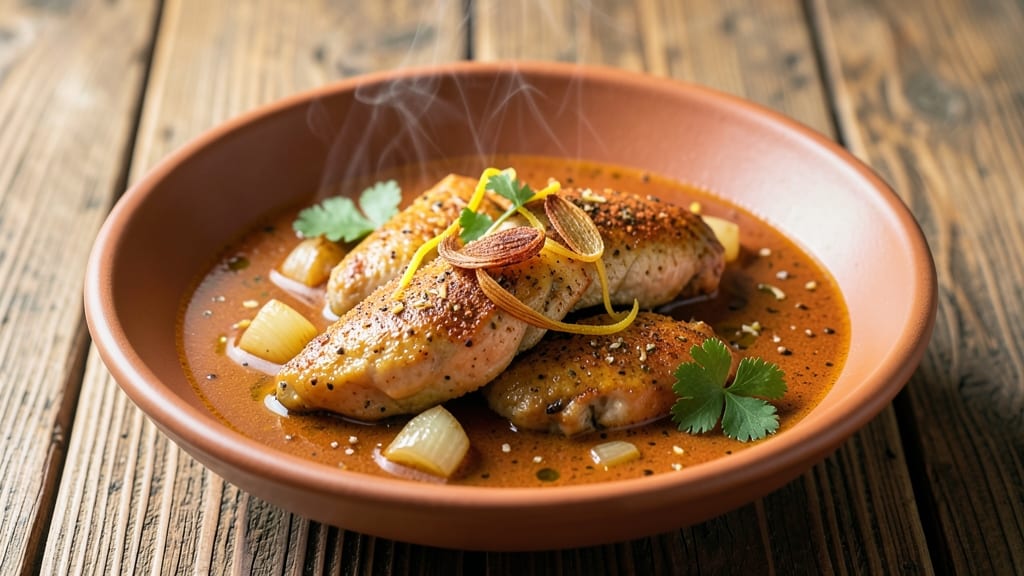
This basic chicken curry recipe with curry powder delivers restaurant-quality flavor with just a few simple ingredients and 30 minutes of hands-on time. The secret lies in properly blooming the spices before adding liquid, which unlocks their full aromatic potential while keeping the process beginner-friendly.
I've perfected this method over countless weeknight dinners—it's the kind of recipe that transforms everyday meals into something special without requiring advanced techniques.
The golden-brown sauce comes from carefully caramelizing onions and garlic before adding curry powder, creating deep, complex flavors that penetrate the chicken.
What you'll end up with is tender, spiced chicken swimming in a velvety sauce that's perfectly balanced—slightly sweet from the tomatoes, tangy from the yogurt, and rich from the coconut milk. The spices infuse the chicken directly during cooking, ensuring every bite is packed with flavor.
This recipe achieves perfect balance between heat and creaminess, with just enough spice to satisfy without overwhelming. The yogurt not only adds tanginess but also tenderizes the chicken during the simmer, resulting in meat that falls apart easily.
Serve it with steamed basmati rice or warm naan to soak up every last drop of that aromatic sauce.
One of the best aspects is how versatile this curry is—double the batch for leftovers that taste even better the next day, or adjust the spice level to suit your preference.
The technique translates beautifully to other proteins like shrimp or chickpeas, making it a foundational recipe in your cooking repertoire. Let's get started on creating this comforting, flavorful dish.
Ingredients for basic chicken curry recipe with curry powder
Transform simple pantry staples into aromatic, velvety curry with just 15 ingredients and expert technique.
| Ingredient | Amount | Notes |
|---|---|---|
| Boneless, Skinless Chicken Thighs 🍗 | 1 ½ lb | Cut into 1-inch pieces |
| Yellow Onions 🧅 | 1 whole | Finely chopped, about 2 cups |
| Garlic Cloves 🧄 | 4 cloves | Minced, about 1 tbsp |
| Curry Powder 🌶️ | 2 tbsp | High-quality, freshly ground |
| Ground Cumin 🌿 | 1 tsp | Toasted for deeper aroma |
| Ground Coriander 🌿 | 1 tsp | Adds citrusy brightness |
| Turmeric Powder 🌶️ | ½ tsp | For vibrant color and earthiness |
| Ginger Root 🌿 | 1 tbsp | Freshly grated, about 1-inch piece |
| Canned Crushed Tomatoes 🍅 | 14 ½ oz | High-quality, no salt added |
| Plain Yogurt 🥛 | ½ cup | Full-fat for creaminess |
| Coconut Milk 🥥 | 13 ½ oz | Full-fat canned variety |
| Chicken Broth 💧 | 1 cup | Low-sodium preferred |
| Extra-Virgin Olive Oil 🫒 | 2 tbsp | For blooming spices |
| Salt 🧂 | 1 tsp | Kosher or sea salt |
| Black Pepper 🌶️ | ½ tsp | Freshly cracked |
The quality of your spices makes all the difference. Penzeys Spices or bulk bins at Whole Foods are ideal for fresh, potent flavors—look for vibrant colors and strong aromas. Curry powder should include turmeric, coriander, and cumin as base components; if making your own, toast the spices in olive oil for 30 seconds to deepen their flavor. For the tomatoes, Muir Glen or Rao's crushed tomatoes provide the best balance of sweetness and acidity without added preservatives. The ginger and garlic should be freshly grated and minced—pre-minced garlic lacks the same aromatic punch.
No curry powder? Combine 1 tbsp each of coriander, cumin, and turmeric with 1 tsp each of fenugreek and black pepper for a close approximation. Substitute coconut milk with light coconut milk and 1/4 cup heavy cream for a richer texture, though the sauce will be slightly less velvety. The yogurt can be swapped for Greek yogurt or sour cream, though plain yogurt provides the best tang without overpowering. If you're avoiding dairy, unsweetened coconut yogurt works beautifully. For the chicken, thighs stay juicier than breasts during the long simmer—bone-in, skin-on thighs are ideal if you can find them.
This curry develops deeper flavor the longer it sits, so make a double batch for leftovers that reheat beautifully. Store in an airtight container in the fridge for up to 5 days, or freeze portions for 3 months. The sauce thickens as it cools, so add a splash of broth when reheating. For meal prep, portion the curry into individual containers with a side of rice—steam the rice separately to prevent sogginess. The spices will continue to mellow over time, making day-old curry even more complex in flavor.
Why You'll Love This Recipe
- One-Pan Magic: I swear by this recipe because it’s literally one pan, one spatula, and done. No chopping boards, no extra pots—just brown the chicken, toss in the onions and garlic, then let the curry powder and cumin work their magic. The only mess is the good kind.
- Deep, Warm Spice: That first spoonful of curry powder and cumin? It’s like a hug in a bowl. The onions caramelize just enough to balance the heat, and the chicken thighs stay juicy while soaking up all that flavor. Honestly, it’s the kind of taste that makes you want to eat it straight from the pot.
- Lunchbox Hero: Between us, this is my go-to for meal prep. Cook a big batch on Sunday, and you’ve got flavorful lunches all week—just reheat and serve. My kids (yes, even the picky ones) grab it without complaint, and I still get seconds.
- Budget-Friendly Feast: Chicken thighs are cheap, onions and garlic are pantry staples, and curry powder lasts forever. For under $15, I feed four people a meal that feels fancy but costs next to nothing. Leftovers? Even better—tastes just as good the next day.
Step-by-step instructions for golden chicken curry
Aromatic spices and tender chicken create a velvety curry with perfect balance of heat and richness.
Prepare the Chicken and Aromatics
Cut the 1.5 lb boneless, skinless chicken thighs into 1-inch pieces and set aside. Finely chop the 1 whole yellow onion (about 2 cups) and mince the 4 cloves garlic (about 1 tablespoon). Grate the 1 tablespoon ginger root using a fine grater or microplane.
In a small bowl, combine the 2 tablespoons curry powder, 1 teaspoon ground cumin, 1 teaspoon ground coriander, 0.5 teaspoon turmeric powder, 1 teaspoon salt, and 0.5 teaspoon black pepper. This aromatic blend forms the foundation of your curry, so measure carefully—each spice contributes uniquely to the flavor profile.
Bloom the Spices in Olive Oil
Heat the 2 tablespoons extra-virgin olive oil in a large, heavy-bottomed pot over medium heat. Add the spice mixture and stir constantly for 1-2 minutes until fragrant and lightly toasted. This step, called "blooming," releases the essential oils in the spices, intensifying their flavors.
Add the chopped onions and cook for 5 minutes until softened and translucent. Stir in the garlic and ginger, cooking for another 30 seconds until the garlic becomes golden and fragrant. Be careful not to burn the garlic—it should smell sweet and inviting, not bitter.
Brown the Chicken and Build the Base
Increase heat to medium-high and add the chicken pieces in a single layer. Let them sear undisturbed for 3-4 minutes until golden brown on the underside. This step creates a flavorful crust on the chicken. Stir and cook for another 2-3 minutes until the chicken is no longer pink on the outside.
Pour in the 14.5 oz canned crushed tomatoes and stir to deglaze the pot, scraping up any browned bits from the bottom. Add the 1 cup chicken broth and bring the mixture to a gentle simmer. The sauce should coat the chicken pieces and begin to thicken slightly as it reduces.
Simmer the Curry to Perfection
Reduce heat to low and cover the pot with a lid. Let the curry simmer for 25-30 minutes, stirring occasionally, until the chicken is tender and the sauce has thickened to a rich, velvety consistency. The chicken should pull apart easily with a fork, and the sauce should coat the back of a spoon.
Stir in the 0.5 cup plain yogurt and 13.5 oz coconut milk, mixing gently to combine. The yogurt adds creaminess while tempering the heat, and the coconut milk creates a luxurious, velvety texture. Simmer uncovered for another 5-7 minutes to let the flavors meld together. Taste and adjust seasoning if needed—you may want to add a pinch more salt or a dash of pepper.
Rest and Serve
Remove the pot from heat and let the curry rest for 5 minutes. This allows the flavors to settle and the sauce to thicken slightly. Serve the curry hot, garnished with fresh cilantro if desired. The dish should be aromatic, with a balance of spicy, creamy, and savory flavors in every bite.
Pair with steamed basmati rice or warm naan to soak up the rich, golden sauce. The curry should have a vibrant color from the turmeric and a depth of flavor from the carefully bloomed spices, creating a restaurant-quality dish in your own kitchen.
Pro Tips For Making Basic Chicken Curry Recipe With Curry Powder
- SEAR CHICKEN IN BATCHES: I learned this the hard way—crowding the pan makes the chicken steam instead of brown. Use a 12-inch skillet and cook thighs in two rounds (4-5 minutes per side) over medium-high heat. The crust forms faster when they’re not jostling for space, and that’s where all the flavor hides.
- TOAST YOUR SPICES FIRST: Skip the dry toast, but do bloom your cumin and curry powder in the same oil you sear the onions. Add them to the pan with the garlic and cook for 30 seconds until fragrant—this cuts the raw taste and deepens the aroma. (Yes, even if you’re impatient like me.)
- SIMMER LOW AND LONG: After adding liquid, resist the urge to boil vigorously. A gentle simmer (small bubbles, occasional rolls) keeps the curry from breaking and ensures the chicken stays tender. Thirty minutes is the minimum—any less and the thighs will taste like rubber.
- USE A SPLASH OF ACID: My grandmother swore by this, and she was right: a tablespoon of tomato paste or a splash of lemon juice at the end brightens the curry and balances the richness. Stir it in during the last 5 minutes—just enough to wake up the flavors without overpowering.
Dietary considerations for basic chicken curry recipe with curry powder
Gluten-Free Adaptations
This curry recipe is naturally gluten-free as long as you use certified gluten-free ingredients. Check your curry powder and chicken broth labels to ensure they contain no wheat or barley additives. I always keep a gluten-free curry powder blend from Badia Spices on hand for these adaptations.
The coconut milk, yogurt, and tomatoes are inherently gluten-free, so no substitutions are needed in those areas. 🌱
Dairy-Free Options
For a dairy-free version, simply replace the ½ cup plain yogurt with ½ cup unsweetened coconut yogurt or ½ cup cashew cream (blend ½ cup soaked cashews with ¼ cup water).
The coconut milk remains dairy-free, so the sauce will maintain its creamy texture. I've tested this substitution and found it works beautifully, especially when using full-fat coconut milk for richness. 🥥
Spice Adjustments
If you're sensitive to heat, reduce the curry powder to 1 tablespoon and add ½ teaspoon mild paprika instead of half the cayenne. For extra heat, add ½ teaspoon cayenne pepper or 1 teaspoon fresh red chili flakes when blooming the spices.
I like to keep a small jar of Penzeys Madras Curry Powder on hand for when I want more complexity without extra heat. 🌶️
Protein Swaps
This recipe works beautifully with other proteins too. For a vegetarian version, substitute the chicken with 1 lb firm tofu (pressed and cubed) or 1 can chickpeas (drained and rinsed). For seafood lovers, use 1 lb shrimp or firm white fish like cod or halibut.
The cooking time will vary slightly—shrimp cooks in just 5-7 minutes while tofu needs 15-20 minutes of simmering. 🍤
Nutritional Boosts
Add 1 cup chopped spinach or kale in the last 5 minutes of cooking to boost nutrition without altering the flavor profile. For extra protein, stir in ½ cup cooked quinoa or ½ cup lentils at the end.
I often add 1 tablespoon nutritional yeast for a cheesy, umami flavor that pairs perfectly with the curry. These additions keep the dish hearty while adding valuable nutrients. 💪
Allergen Considerations
For nut allergies, ensure your coconut milk is processed in a nut-free facility. For soy allergies, use chicken or vegetable broth instead of soy-based broths. If you're avoiding nightshades (like tomatoes), substitute with 1 cup tomato paste mixed with 1 cup water or 1 cup pureed butternut squash.
Always check labels on canned goods for hidden allergens. 🚨
Nutrition facts
Frequently asked questions
Can I use chicken breasts instead of thighs?
Chicken breasts will work, but they're more prone to drying out during the long simmer. If using breasts, cut them into 1-inch cubes and add them to the curry only after the sauce has simmered for 15 minutes—this ensures they cook through without becoming rubbery. For best results, marinate the breasts in 1 tablespoon yogurt and 1 teaspoon lemon juice for 30 minutes before adding to the pot.
How can I make this curry less spicy?
Reduce the curry powder to 1 tablespoon and omit any cayenne or chili flakes. For extra mildness, stir in 1 tablespoon honey or 1 teaspoon sugar at the end to balance the heat. If you've already added spices, the yogurt will naturally temper the spice level—just add an extra 2 tablespoons at the end of cooking.
What's the best way to store leftovers?
Let the curry cool completely, then transfer to an airtight container. It keeps in the fridge for 4-5 days or freezes beautifully for 3 months. When reheating, add 1-2 tablespoons water or broth to restore the sauce's creaminess. For best texture, reheat gently on the stove over low heat—microwaving can make the sauce separate.
Can I make this curry in an Instant Pot?
Sauté the onions, garlic, and spices as directed, then add all remaining ingredients except the yogurt and coconut milk. Seal the lid and cook on High Pressure for 8 minutes, followed by a 10-minute natural release. Stir in the yogurt and coconut milk, then cook on Sauté mode for 5 minutes to meld flavors. The pressure cooking time will be shorter, but the flavors develop similarly.
Why does my curry taste bland?
Most likely, you didn't bloom the spices long enough. Always toast the spices in oil for 1-2 minutes until fragrant before adding other ingredients. For extra depth, add 1 teaspoon fish sauce or ½ teaspoon smoked paprika at the end. Another common issue is using low-quality curry powder—opt for freshly ground blends with visible turmeric and cumin.