Main Courses
Transforming humble chicken feet into a deeply umami-rich stock unlocks a flavor foundation that elevates soups, stews, and braises to restaurant-quality depth. This recipe delivers a golden, gelatinous broth packed with collagen and natural sweetness that transforms simple dishes into something extraordinary.
I first discovered this technique while exploring traditional Chinese cooking methods, where chicken feet are revered for their ability to create velvety, nutrient-dense stocks.
The process requires patience—8 to 12 hours of gentle simmering—but the results are worth every minute. You'll start with cleaned, blanched chicken feet, then build layers of flavor using aromatics like ginger, garlic, and star anise.
The key is maintaining a low, steady heat to extract maximum collagen without clouding the broth. This stock isn't just for show; it's the secret weapon behind silky textures and complex flavors in dishes like pho, hot pot, or even hearty winter soups.
What you'll end up with is a clear, aromatic liquid that's rich enough to stand alone as a sipping broth or serve as the backbone of elaborate recipes. The gelatinous quality comes from the collagen in the feet, giving your dishes that signature mouthfeel that separates homemade cooking from store-bought.
When properly strained and stored, this stock keeps for weeks in the refrigerator, making it a pantry staple for serious home cooks.
For those new to working with chicken feet, don't let the unusual ingredient intimidate you—the preparation is straightforward once you know the steps. We'll cover everything from proper cleaning and blanching to simmering techniques that maximize flavor extraction.
Whether you're making this for a specific recipe or building your stock collection, this method will become a cornerstone of your cooking repertoire.
Ingredients for chicken feet stock
Patience and simple ingredients transform chicken feet into golden, collagen-rich stock for soups and stews.
| Ingredient | Amount | Notes |
|---|---|---|
| Chicken Feet 🦶 | 2 ½ lb | Cleaned and blanched thoroughly |
| Cold Water 💧 | 8 cups | Filtered or spring water preferred |
| Yellow Onion 🧅 | 1 whole | Quartered, skin on for color |
| Fresh Ginger 🌿 | 2 tbsp | Thinly sliced, peeled (about 1 oz) |
| Garlic Cloves 🧄 | 6 cloves | Smashed, skin on for aroma |
| Star Anise Pods 🌟 | 2 whole | Lightly crushed for intensity |
| Cinnamon Stick 🍃 | 1 whole | 2-inch length for warmth |
| Bay Leaves 🍃 | 2 whole | Fresh if available, dried works |
| White Peppercorns 🌶️ | 1 tsp | Crushed for subtle heat |
| Salt 🧂 | 1 ½ tsp | Diamond Crystal preferred |
| Lemon Juice 🍋 | 1 tbsp | Freshly squeezed at end |
| Fish Sauce 🐟 | 1 tbsp | Red Boat preferred for depth |
Chicken feet are the star here—look for plump, clean feet at Asian markets or specialty butchers. Costco often carries them frozen, but fresh is ideal if you can find it. The blanching step (boiling 10 minutes, then ice bath) removes impurities and unlocks maximum collagen. Ginger and star anise are non-negotiable for that signature umami depth. Whole Foods bulk bins have great quality if you're buying in small amounts, but the frozen section at H Mart usually has the best selection for bulk purchases. Skip the pre-cleaned convenience packs—they often contain additives that cloud the stock.
No star anise? 1 tsp ground anise seed works in a pinch, but the flavor won't be identical. Fresh ginger is ideal, but powdered ginger at half the amount gets you close. The fish sauce adds complexity—Red Boat or Three Crabs brands have the best balance. For a vegetarian version, swap chicken feet for shiitake mushrooms (1 lb) plus 1 tbsp soy sauce. The onion and garlic should be roughly chopped, not minced—they'll dissolve completely during simmering. If you're using dried bay leaves, toast them lightly in a dry pan first to deepen their aroma.
This stock peaks after 10-12 hours of simmering—don't rush it. Strain through a fine-mesh sieve lined with cheesecloth for maximum clarity. Store in glass jars in the fridge for up to 2 weeks or freeze in ice cube trays for 3 months. The gelatinous quality thickens as it cools, so reheat gently. I always make a double batch—one for immediate use, one to freeze. The first batch always disappears fastest, so plan accordingly. For restaurant-quality results, use within 3 days of making it fresh.
Why You'll Love This Recipe
- No Chopping Needed: I swear by this—just toss in whole garlic cloves, a few onion quarters, and a ginger chunk. The stock simmers itself into deep umami magic while I’m doing laundry or scrolling through my phone.
- Umami Bomb: That crispy chicken skin and collagen-rich feet? It turns water into liquid gold—rich, gelatinous, and packed with flavor that makes even my picky eaters pause mid-sentence.
- Freezer-Friendly Gold: Make a big batch (I do this every Sunday) and freeze it in ice cube trays. Perfect for quick soups, braises, or even ramen—just toss a cube into boiling water and boom, instant depth.
- Budget Game-Changer: Honestly, chicken feet are the best stock secret. They’re cheaper than chicken bones, break down into pure flavor, and stretch my meals further than any store-bought broth ever could.
Step-by-step instructions for chicken feet stock
Transform humble chicken feet into a velvety, umami-packed foundation for your next soup or stew.
Blanch the Chicken Feet Thoroughly
Place the 2.5 lb chicken feet in a large stockpot and cover with cold water by about 2 inches. Bring to a boil over high heat, then immediately reduce to a vigorous simmer. Let them cook uncovered for 15 minutes, skimming off any foam that rises to the surface. This step removes impurities and prepares the collagen for extraction.
Here's the thing—don't rush this. The blanching process ensures your final stock won't be cloudy or bitter. After 15 minutes, drain the feet and rinse them under cold water to remove any residual foam. The feet should now be clean and ready for the main cooking phase, though they'll still look unappetizing at this stage. That's normal.
Build the Aromatic Base and Simmer
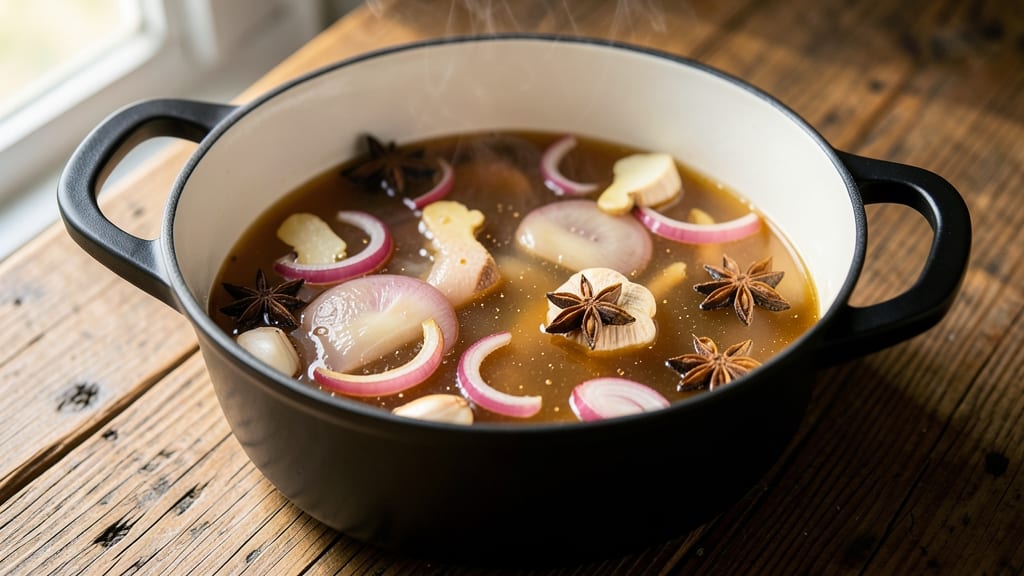
Return the blanched chicken feet to the same stockpot and add the 8 cups cold water. Place the pot over medium-high heat until the liquid reaches a gentle boil, then immediately reduce to a low simmer. Add the quartered yellow onion, 2 tbsp fresh ginger, 6 smashed garlic cloves, 2 lightly crushed star anise pods, 1 cinnamon stick, 2 bay leaves, and 1 tsp crushed white peppercorns.
This is where the magic begins. The aromatic vegetables and spices will infuse the broth with deep, complex flavors. Let the mixture simmer gently for 3 hours, maintaining a temperature just below a full boil. You'll notice the chicken feet gradually break down, releasing gelatinous collagen that thickens the stock. Skim off any foam that forms during the first hour of simmering to maintain clarity.
Strain and Finish with Brightening Agents
After 3 hours, remove the chicken feet from the pot using tongs and discard them. Strain the broth through a fine-mesh sieve or cheesecloth into a clean pot, pressing gently on the solids to extract every last drop of flavor. You should have about 6-7 cups of rich, gelatinous stock at this point.
Return the strained stock to the pot and bring it to a gentle simmer over medium heat. Add the 1.5 tsp salt and let it dissolve completely. Here's where it gets good—stir in the 1 tbsp fish sauce and 1 tbsp freshly squeezed lemon juice. These final ingredients brighten the broth and balance its deep, savory notes. Simmer for an additional 10 minutes to fully integrate the flavors.
Cool and Store for Maximum Flavor
Remove the pot from heat and let the stock cool to room temperature. The gelatin will begin to set as it cools, creating a luxurious texture. For best results, refrigerate the stock overnight. This allows the fat to solidify on top, making it easy to remove before using.
Once chilled, skim off the hardened fat and discard it. The stock should now be crystal clear with a deep amber color and a rich, umami aroma. Store it in airtight containers in the refrigerator for up to 5 days, or freeze for up to 3 months. This stock will elevate any dish it touches—soups, stews, or even as a braising liquid for meats.
Pro Tips For Making Chicken Feet Stock
- Scald Feet First: DESCRIPTION:
- Peel Ginger Roughly: DESCRIPTION:
- Don’t Rush the Simmer: DESCRIPTION:
- Save the Water: DESCRIPTION:
Storing and reheating this dish
Refrigerator Storage
After your stock cools completely, transfer it to airtight glass containers—I recommend Le Parfait jars or Ball mason jars—leaving about 1 inch of headspace to prevent oxidation. Store in the fridge for up to 5 days, though the flavor actually deepens over time.
The gelatinous collagen will firm up slightly, so stir gently before using. For best clarity, skim off any congealed fat that forms on top before reheating. 💧
Freezer Preservation
For long-term storage, freeze the stock in ice cube trays or silicone molds—this makes it easy to grab just what you need for recipes. Once frozen, transfer cubes to a freezer-safe bag and flatten to save space.
This stock keeps its quality for 3 months without losing its rich umami depth. When ready to use, thaw overnight in the fridge or quickly in a bowl of warm water. Never microwave frozen stock directly—it creates hot spots that can ruin delicate dishes. ❄️
Reheating Methods
For restaurant-quality results, reheat your stock on the stovetop over medium-low heat until just simmering—about 5-7 minutes. Never boil it, as this can break down the gelatin and make the stock cloudy. If using frozen cubes, add them directly to your recipe without thawing first.
For quick reheating, use the microwave on 50% power in 1-minute intervals, stirring between each. Always check the temperature reaches 165°F for safety. 🔥
Fat Removal Tips
The hardened fat that forms on top when refrigerated is easy to remove—just scoop it off with a spoon before using. For ultra-clear stock, chill it in the freezer for 1-2 hours instead of overnight—the fat solidifies faster and is simpler to discard.
If you prefer to keep some fat for flavor, leave a thin layer (about ¼ inch) on top. Just remember, the fat adds richness but can make the stock greasy if overused in delicate dishes. 🧂
Flavor Preservation
To maintain maximum flavor, avoid storing stock in plastic containers—plastic can absorb odors and alter the taste. If you must use plastic, opt for BPA-free silicone bags rated for freezer use. For best results, label your containers with the date made—this helps track freshness.
A properly stored batch will retain its deep umami character for weeks, making it perfect for last-minute recipe upgrades. ✨
Reviving Stale Stock
If your stock develops an off smell or cloudiness after refrigeration, don't toss it—simmer it gently with 1 tsp fish sauce and 1 tbsp lemon juice to refresh the flavor. This works surprisingly well for stock that's been stored for 3-4 days past its prime.
For freezer-burned stock, use it in braised dishes where texture isn't critical—it'll still add depth to soups or stews. The key is acting quickly before the collagen fully degrades. 💡
Nutrition facts
Frequently asked questions
Why do chicken feet make such a rich stock?
Chicken feet are packed with collagen and connective tissue, which breaks down during long simmering to create a naturally thick, gelatinous broth. The bones and skin also contribute minerals and umami compounds that aren't found in chicken breast or thighs. This is why traditional Asian cuisines prize them—they transform simple dishes into restaurant-quality meals.
Can I substitute chicken feet with other ingredients?
For a vegetarian version, use 1 lb dried shiitake mushrooms plus 1 tbsp soy sauce and 1 tsp miso paste to mimic the umami depth. If you prefer meat, chicken necks and backs work well (simmer for 6-8 hours) but won't yield the same gelatinous texture. The key is using collagen-rich ingredients—never substitute with lean chicken breast.
How do I know when the stock is done?
The stock is ready when it's deep amber in color and has a rich, savory aroma. After 8-12 hours of simmering, the chicken feet should be completely broken down, and the broth will have a slight gelatinous quality when chilled. Taste it—if the flavor is concentrated and umami-forward, it's perfect. Never let it boil vigorously, as this can make it cloudy.
What's the best way to use this stock?
This stock shines in pho, hot pot, braised dishes, and ramen where you need depth and body. Use 1-2 cups as a base for soups, or reduce it by half to make a glossy sauce for stir-fries. The gelatinous quality also makes it perfect for thickening sauces—simmer it with cornstarch for a silky finish. Avoid using it in delicate dishes like seafood soups where its richness might overpower.
Why did my stock turn cloudy?
Cloudiness usually happens from boiling too vigorously or not skimming foam during simmering. To fix it, strain the stock through a coffee filter or cheesecloth for extra clarity. For prevention, always simmer at a gentle bubble and skim foam for the first 2 hours. If the cloudiness persists, the stock may have absorbed impurities from the chicken feet—start with a longer blanching time next batch.