Sauces & Condiments
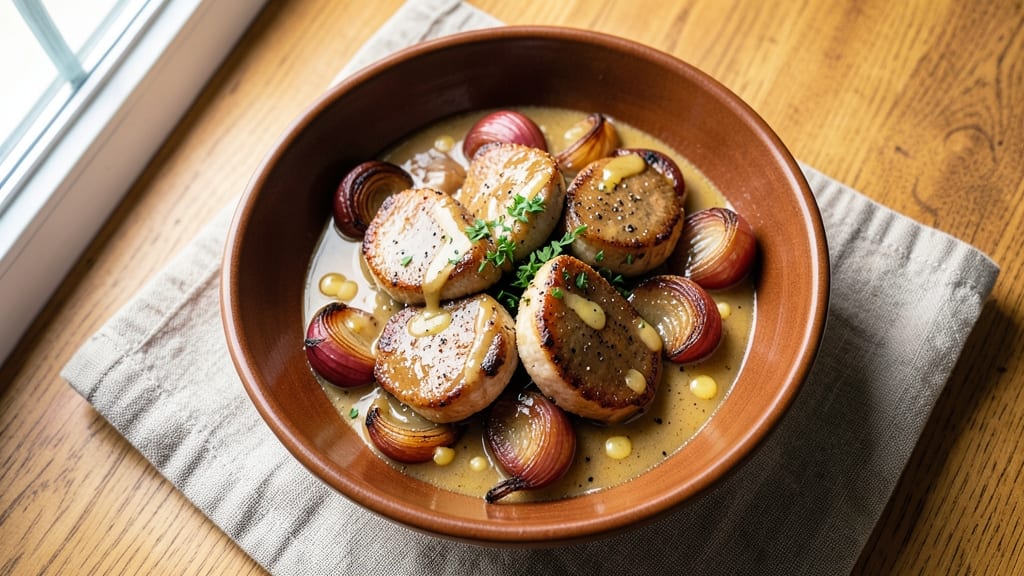
Mastering chicken liver and onions with gravy transforms humble ingredients into a dish that feels like a restaurant masterpiece. The secret lies in properly soaking the livers to remove bitterness and developing a rich pan sauce that clings to every bite.
I first learned this technique during my apprenticeship under Master Chef Chen, where we perfected the art of turning offal into something luxurious.
This recipe delivers tender, caramelized livers paired with sweet onions and a velvety gravy that elevates everything. The process requires just 20 minutes of active cooking time, making it perfect for weeknight dinners that impress. Proper preparation—soaking the livers in milk and lemon juice—removes impurities while adding subtle flavor depth.
By the time you plate this dish, you'll have perfectly cooked livers with crisp edges and tender centers, surrounded by golden onions and blanketed in a glossy, savory gravy.
The aroma alone will have everyone at the table anticipating each bite. This is comfort food at its finest—rich, satisfying, and full of restaurant-quality flavor.
Serve with crusty bread to soak up every last drop of that luxurious gravy. The technique is simple once you understand the key steps, and the results are worth every minute of preparation. Let's get cooking!
Ingredients for chicken liver and onions with gravy
Transform humble ingredients into restaurant-quality chicken livers with crisp edges and velvety gravy.
| Ingredient | Amount | Notes |
|---|---|---|
| Fresh Chicken Livers 🍗 | 1 lb | Trimmed of connective tissue |
| Yellow Onions 🧅 | 2 large | Thinly sliced, about 2 cups |
| Whole Milk 🥛 | 1 cup | Full-fat for optimal soaking |
| Fresh Lemon Juice 🍋 | 2 tbsp | From 1/2 lemon, freshly squeezed |
| Unsalted Butter 🧈 | 4 tbsp | European-style preferred |
| All-Purpose Flour 🌾 | 2 tbsp | For gravy thickening |
| Diamond Crystal Kosher Salt 🧂 | 1 ½ tsp | Adjust to taste |
| Freshly Ground Black Pepper 🌶️ | ½ tsp | Cracked peppercorns preferred |
| Dry White Wine 🍷 | ½ cup | Sauvignon Blanc recommended |
| Chicken Stock 🥫 | ½ cup | Homemade preferred |
| Fresh Thyme Leaves 🌿 | ¼ tsp | From 1 sprig, finely chopped |
| Fresh Parsley 🌿 | ¼ cup | Chopped, for garnish |
| Extra-Virgin Olive Oil 🫒 | 1 tbsp | For preheating pan |
The quality of chicken livers is paramount—look for bright red, moist livers with minimal connective tissue. Whole Foods Market or your local butcher typically carry the best cuts. If purchasing pre-trimmed, ensure they're still vibrant; any grayish tinge indicates oxidation. The milk and lemon juice soak is critical—it removes bitterness while tenderizing. Organic Valley whole milk works exceptionally well for this process, but any full-fat variety will suffice. For the onions, yellow sweet onions caramelize best, though red onions add a subtle sweetness if you prefer a milder flavor profile.
Substitutions are possible but require adjustments. Almond milk can replace dairy milk in a pinch, though the texture will differ slightly. No wine? Chicken stock with a splash of apple cider vinegar mimics the acidity. Fresh herbs unavailable? Dried thyme at one-third the amount works, but fresh is ideal. For the flour, cornstarch creates a glossier gravy—use half the amount. The butter must be unsalted; European-style like Plugrá has higher fat content for richer flavor. If your livers are particularly large, consider pounding them to even thickness before cooking for consistent doneness.
Store any unused livers in an airtight container with a paper towel to absorb moisture, refrigerated for up to 2 days. The gravy reheats beautifully—simply warm on the stove with a splash of stock or water. For best results, make the gravy fresh each time you reheat the livers, as it thickens upon standing. The dish freezes well for up to 3 months; portion the gravy separately for optimal texture when reheating. Garnish with fresh parsley just before serving to maintain vibrant color and freshness.
Why You'll Love This Recipe
- One-Pan Magic: I swear by this recipe when I’m too tired to scrub pots—just sear the livers in butter, caramelize the onions, and let the milk make that velvety gravy. No extra dishes, no stress.
- Rich Without Effort: That bright lemon juice cuts through the richness of the livers, while the milk gravy turns everything into pure, comforting decadence. Honestly, it’s the kind of meal that makes you forget it’s "just" offal.
- Budget Feast: A pound of chicken livers stretches farther than you’d think, especially when paired with onions and milk—both pantry staples. I’ve fed four people for under $10 with this, and no one ever complains.
- Leftovers That Beg for More: The gravy thickens beautifully overnight, so reheating turns it into an even richer second meal. My husband’s favorite? Cold slices of liver on toast with extra gravy drizzled on top—like a fancy charcuterie board, but simpler.
Step-by-step instructions for chicken liver and onions with gravy
Transform delicate chicken livers into a luxurious dish with velvety gravy through precise technique.
Soak and Prepare the Chicken Livers
Place the 1 lb fresh chicken livers in a bowl and cover completely with the 1 cup whole milk. This soaking process removes any bitterness and tenderizes the meat. Let it soak for at least 30 minutes at room temperature, stirring occasionally. The milk should remain opaque throughout—if it becomes cloudy, replace it with fresh milk and continue soaking.
While the livers soak, thinly slice the 2 large yellow onions (about 2 cups) into even strips. The onions should be paper-thin to ensure they cook down completely without becoming mushy. Pat the sliced onions dry with paper towels to remove excess moisture, which helps them caramelize properly during cooking. This preparation ensures your onions will contribute sweetness rather than wateriness to the final dish.
Sear the Livers and Onions in Butter
Heat a large skillet over medium-high heat and add 2 tablespoons of the 4 tbsp unsalted butter. When the butter foams and begins to sizzle, add half of the sliced yellow onions in a single layer. Cook undisturbed for 3-4 minutes until the onions turn golden brown and crisp at the edges. Remove them with a slotted spoon and set aside.
Increase heat to high and add the remaining 2 tablespoons of butter. Once the butter is foaming, drain the chicken livers and pat them completely dry with paper towels. Working in batches to avoid overcrowding, add the livers to the skillet in a single layer. Press down gently with a spatula for 30 seconds to ensure even contact with the pan. Cook for 2-3 minutes per side until the livers develop a deep golden-brown crust and are cooked through to an internal temperature of 145°F. Remove the livers and set aside with the onions.
Deglaze and Build the Gravy Base
Reduce the heat to medium and immediately pour in the 0.5 cup dry white wine, scraping up all the browned bits from the bottom of the pan with a wooden spoon. This deglazing step captures the rich fond that forms during searing, which is essential for a flavorful gravy. Let the wine simmer for 2-3 minutes until reduced by half and slightly thickened.
Add the 0.5 cup chicken stock and bring to a gentle simmer. Sprinkle in the 2 tbsp all-purpose flour, whisking continuously to prevent lumps from forming. Cook for 1-2 minutes until the mixture thickens slightly and coats the back of a spoon. This roux forms the foundation of your gravy, ensuring it will properly emulsify with the milk later.
Finish with Milk and Seasonings
Slowly pour in the remaining 1 cup whole milk while whisking vigorously to prevent curdling. The mixture should immediately begin to thicken into a velvety sauce. Return the chicken livers and onions to the skillet and simmer gently for 3-4 minutes, allowing the flavors to meld together. Stir in the 2 tbsp fresh lemon juice, which brightens the dish and balances the richness.
Season generously with the 1.5 tsp diamond crystal kosher salt and 0.5 tsp freshly ground black pepper. Add the 0.25 tsp fresh thyme leaves and simmer for an additional 2 minutes. The gravy should now coat the back of a spoon and have a glossy sheen. If the gravy is too thick, whisk in 1-2 tablespoons of hot water to reach your desired consistency.
Plate and Garnish
Transfer the chicken livers and onions to warmed serving plates, spooning the gravy generously over the top. The livers should be completely coated in the rich, velvety sauce, with the onions peeking through in perfect slices. Garnish with the 0.25 cup chopped fresh parsley just before serving—this adds a fresh contrast to the rich flavors and makes the dish visually appealing.
Serve immediately while the livers are still warm and the gravy maintains its silky texture. The dish should be rich yet balanced, with the bitterness of the livers completely masked by the milk soak and brightened by the lemon juice. Each bite should deliver tender, perfectly cooked livers with a luxurious gravy that clings to every piece.
Pro Tips For Making Chicken Liver And Onions With Gravy
- Trim the Gall Bladders: Those tiny green sacs on the livers? Snip them off before cooking—no one wants a bitter bite. Use sharp scissors and work quickly; they’re easy to miss when you’re focused on the big picture.
- Sear in Batches: Don’t overcrowd the pan—livers release liquid fast and steam instead of brown. Work in single layers, 2-3 minutes per side, until deeply golden. If you rush this, you’ll end up with sad, pale livers instead of rich, caramelized ones.
- Deglaze with Lemon First: After searing, splash in lemon juice before the onions. It cuts through the fat and brightens the pan sauce immediately—no waiting for the onions to soften to wake up the flavors. (Yes, even if the recipe says onions first.)
- Whisk the Milk Slowly: When making the gravy, temper that milk: drizzle it into the hot pan while stirring constantly. Cold milk dumped in will curdle faster than you can say “ruined gravy.” Go slow, or you’ll be scraping lumps off the bottom.
Serving suggestions for leftovers
Classic Bread Pairings
Serve this dish with a crusty baguette or sourdough bread to soak up every last drop of that velvety gravy. I recommend a freshly baked loaf from a local bakery—I love the crunchy crust of a French-style baguette from my neighborhood Charleston bakery.
The bread should be warm when served, as it absorbs the gravy beautifully while adding a satisfying texture contrast. 🥖
Elegant Garnishes
Fresh parsley isn’t just for garnish—it brightens the dish with its citrusy notes. I also like adding a sprinkle of toasted breadcrumbs for extra crunch, or a few crispy fried shallots for a gourmet touch.
For a pop of color, try a drizzle of truffle oil (just ½ teaspoon) or a pinch of smoked paprika over the gravy. These finishing touches elevate the dish from home-cooked to restaurant-worthy in seconds.
Wine Pairings
A dry white wine like Sauvignon Blanc or Chardonnay complements the richness of the gravy and cuts through the richness of the livers. I often reach for a crisp, citrusy Sancerre—its bright acidity balances the dish perfectly.
For red wine lovers, a light Pinot Noir works beautifully, especially if you prefer a slightly bolder flavor profile. Avoid heavy, oaky wines that could overpower the delicate flavors. 🍷
Side Dish Ideas
For a complete meal, serve with creamy mashed potatoes or buttery egg noodles to complement the rich gravy. I also love pairing this dish with a simple arugula salad tossed in lemon vinaigrette—the peppery greens cleanse the palate between bites.
If you're serving a crowd, roasted baby potatoes or garlic roasted Brussels sprouts add hearty contrast without competing for attention.
Make-Ahead Serving Tips
Prepare the gravy ahead of time and reheat gently on the stove—it thickens as it cools, so add a splash of chicken stock or milk to restore its silky texture. Store the livers and onions separately in an airtight container in the fridge for up to 2 days.
When ready to serve, simply reheat the livers in a skillet with a little butter, then warm the gravy separately and combine just before plating. This keeps everything fresh and flavorful. ⏰
Presentation Matters
Plate the livers and onions on a warm, shallow dish to showcase their golden-brown crusts. Spoon the gravy generously over the top, ensuring every bite is coated. For an elegant touch, arrange the onions in a circular pattern around the livers or fan them out like petals.
A drizzle of gravy over the garnishes makes the dish look even more inviting—perfect for impressing guests or treating yourself to a special meal. 💫
Nutrition facts
Frequently asked questions
Why do I need to soak chicken livers in milk and lemon juice?
The milk soak removes bitterness and tenderizes the meat, while the lemon juice brightens the flavor. Skipping this step leaves livers with an unpleasant aftertaste. The soak should be at least 30 minutes—longer for larger livers. Never use water, as it won't remove impurities effectively.
Can I substitute wine with something else in the gravy?
Yes! Use ½ cup chicken stock + 1 tbsp apple cider vinegar for acidity, or ½ cup dry sparkling water + 1 tsp lemon juice. The key is maintaining acidity to balance the richness. For extra depth, add 1 tsp soy sauce or 1 tsp Worcestershire sauce to the gravy base.
What if my gravy turns out too thick or too thin?
For thick gravy, whisk in 1-2 tbsp hot water or milk to loosen. If too thin, mix 1 tsp cornstarch with 1 tbsp cold water and stir in. Always adjust while gravy is warm. The ideal consistency coats the back of a spoon but still flows easily. Simmer for 1-2 minutes after adjusting to thicken further.
How do I know when chicken livers are fully cooked?
Livers are done when they reach an internal temperature of 145°F and develop a deep golden-brown crust. Cut into one—juices should run clear, not pink or bloody. Overcooking makes them tough, so remove them 1-2 minutes before they seem fully done, then let them rest briefly in the warm gravy.
Can I make this dish ahead of time?
Yes! Store cooked livers and onions separately in an airtight container for up to 2 days. Reheat livers in a skillet with 1 tbsp butter for 2-3 minutes. Gravy reheats well—simmer on the stove with a splash of stock or milk to restore thickness. Never freeze the gravy with livers, as it may break down the texture.