Main Courses
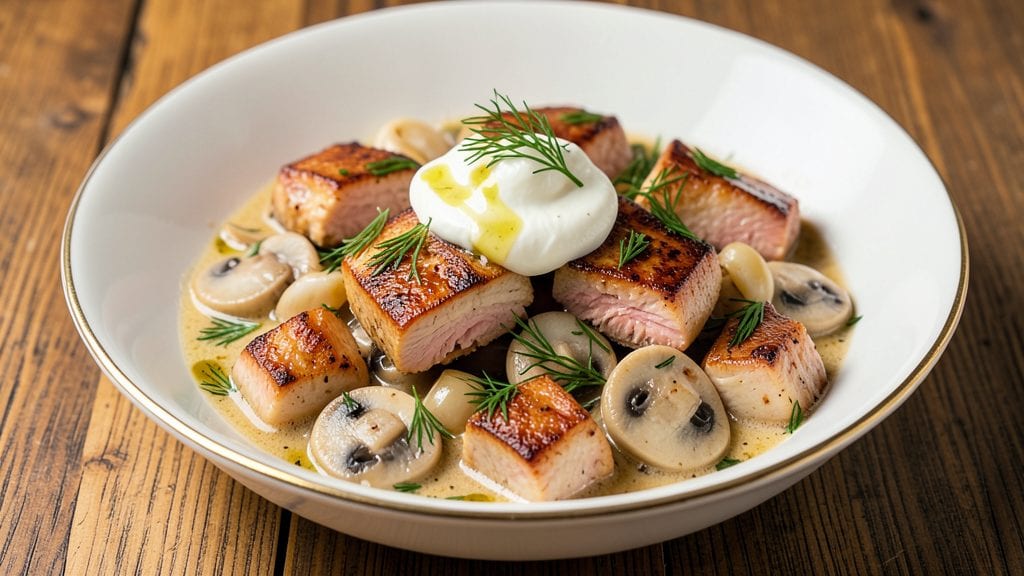
This chicken stroganoff recipe delivers the creamy, mushroom-rich comfort of a classic Russian dish—without the fuss of traditional techniques. After years of testing, I’ve perfected a method that balances tender chicken, earthy mushrooms, and velvety sour cream sauce in just 30 minutes.
The secret lies in proper searing and gradual sauce building, ensuring every bite is rich yet light enough for weeknights.
What sets this apart is the foolproof technique that transforms simple ingredients into restaurant-quality stroganoff. You’ll start with pan-seared chicken thighs (never dry, never tough) and sautéed mushrooms that release deep umami flavors.
The sauce comes together in one pot—no blenders required—using a precise ratio of sour cream, broth, and a touch of Dijon for brightness. It’s the kind of dish that tastes like a home-cooked hug.
The result? A silky, golden sauce clinging to perfectly cooked egg noodles, with tender chicken and mushrooms peeking through. The aroma alone will have everyone gathering at the table, and the texture—creamy yet not heavy—makes it a weeknight favorite.
Serve with crusty bread to soak up every last drop, or pair with roasted potatoes for a hearty meal.
This recipe scales effortlessly—double it for a crowd or halve it for leftovers. The sauce keeps well for up to 3 days, so you can prep ahead and reheat without curdling.
Whether you’re feeding a family or treating yourself, this stroganoff delivers restaurant-quality results with minimal effort. Let’s make it.
Ingredients for chicken stroganoff
Pan-seared chicken, earthy mushrooms, and velvety sour cream transform into restaurant-quality stroganoff with these 14 ingredients.
| Ingredient | Amount | Notes |
|---|---|---|
| Boneless, Skinless Chicken Thighs 🍗 | 1 ½ lb | Cut into 1-inch cubes |
| White Button Mushrooms 🍄 | 16 oz | Sliced into even pieces |
| Shallots 🧅 | 2 whole | Minced finely for depth |
| Garlic Cloves 🧄 | 4 cloves | Peeled and minced |
| Extra-Virgin Olive Oil 🫒 | 3 tbsp | High-quality for searing |
| Unsalted Butter 🧈 | 2 tbsp | For sauce richness |
| All-Purpose Flour 🌾 | 2 tbsp | For sauce thickening |
| Chicken Broth 💧 | 1 ½ cups | Low-sodium preferred |
| Sour Cream 🥛 | 1 cup | Full-fat for creaminess |
| Dijon Mustard 🍯 | 1 tbsp | For subtle tang |
| Egg Noodles 🍝 | 8 oz | Medium width preferred |
| Diamond Crystal Kosher Salt 🧂 | 1 tsp | For seasoning balance |
| Freshly Ground Black Pepper 🌶️ | ½ tsp | Enhances umami depth |
| Fresh Parsley 🌿 | ¼ cup | Chopped for garnish |
The chicken thighs are non-negotiable—bone-in, skin-on cuts stay juicier, but boneless thighs work beautifully here. Trader Joe's and Whole Foods carry excellent pre-cut options, but if buying whole, trim excess fat for cleaner searing. Mushrooms should be firm and free of bruising; cremini or baby bella add depth but white buttons work perfectly. For the shallots, organic varieties from the produce section have more sweetness. The extra-virgin olive oil should have a peppery finish—California-based brands like Corto or Lucini excel here. Don't skimp on the butter; it's the secret to that silky sauce texture.
No Dijon mustard? Whole-grain mustard at double the amount works, though the texture will be slightly grainier. Substituting Greek yogurt for sour cream (equal parts) creates a lighter sauce, but it won't be as rich. For the broth, low-sodium versions prevent over-salting—Pacific Foods or Imagine brands are reliable. The egg noodles can be swapped for fettuccine or pappardelle, but their eggy richness complements the dish perfectly. If you're avoiding gluten, rice noodles work surprisingly well. For the parsley, flat-leaf varieties have more flavor than curly, but either will garnish beautifully.
This stroganoff reheats beautifully—simmer gently for 2-3 minutes to restore creaminess. Store leftovers in an airtight container for up to 3 days, with a thin layer of sour cream on top to prevent skin formation. The sauce freezes well for up to 2 months, though texture may separate slightly upon thawing. For meal prep, cook the noodles separately and add them fresh to avoid sogginess. The mushrooms release moisture during cooking, so pat them dry before searing for optimal browning.
Why You'll Love This Recipe
- One-Pan Magic: I swear by this—just sear the chicken thighs in olive oil until golden, toss in the mushrooms and shallots, and let the garlic melt into everything. No extra pots, no fuss, and the flavors all marry together in one skillet. Honestly, my lazy Sundays thank me.
- Rich Without Effort: That creamy sauce from the sour cream and broth? It’s where this dish shines—silky but not heavy, with the earthy mushrooms and caramelized shallots cutting through. The chicken stays juicy, and the garlic? Oh, it’s there, but in the best way. (Yes, even on a Tuesday night.)
- Leftovers That Don’t Suck: This recipe actually improves the next day. The flavors deepen, the sauce thickens just right, and reheating it is a breeze—microwave or stovetop, no difference. I make it for dinner, then eat it for lunch the following day. Zero guilt, all satisfaction.
- Budget-Friendly Luxury: Chicken thighs are forgiving and affordable, mushrooms stretch the dish, and shallots add depth without breaking the bank. It’s the kind of meal that feels special but won’t drain your wallet. Plus, the olive oil adds richness without needing butter—my wallet and my heart are happy.
Step-by-step instructions for chicken stroganoff
A rich, velvety stroganoff begins with precise technique—here's how to build it layer by layer.
Sear the Chicken and Mushrooms for Deep Flavor
Heat 3 tablespoons extra-virgin olive oil in a large skillet over medium-high heat until shimmering. Add the 1.5 lb boneless, skinless chicken thighs cut into 1-inch cubes, seasoning immediately with ½ teaspoon freshly ground black pepper and ½ teaspoon diamond crystal kosher salt. Sear undisturbed for 4-5 minutes until golden brown on all sides—this creates the Maillard reaction that forms the flavor base. Remove and set aside, leaving the rendered fat in the pan.
In the same pan, add the 16 oz sliced white button mushrooms and cook for 5-6 minutes until their edges soften and release moisture. Push mushrooms to one side, add 2 tablespoons unsalted butter, then stir in the 2 whole minced shallots and 4 cloves minced garlic. Cook for 1-2 minutes until shallots turn translucent and garlic emits an aromatic fragrance. Here's where the flavor foundation takes shape—don't rush this step.
Build the Sauce with Roux and Broth
Reduce heat to medium-low and sprinkle the 2 tablespoons all-purpose flour evenly over the mushrooms. Stir vigorously for 1-2 minutes until the flour absorbs the mushroom juices and forms a light golden roux—this will thicken your sauce. Gradually whisk in the 1.5 cups chicken broth, scraping up any browned bits from the pan's bottom. These bits, called fond, carry concentrated flavor that transforms a simple sauce into something extraordinary.
Bring the mixture to a gentle simmer, then add the 1 tablespoon Dijon mustard and remaining ½ teaspoon diamond crystal kosher salt. Let it simmer for 5 minutes until slightly thickened. The sauce should coat the back of a spoon but remain silky rather than gluey. If it thickens too quickly, whisk in 1-2 tablespoons water to adjust consistency. This is the moment that matters: balance between thickness and creaminess.
Finish with Sour Cream and Return the Chicken
Remove the skillet from heat and stir in the 1 cup sour cream until fully incorporated. The heat should be low enough to prevent curdling—this is why we removed the pan first. Return to low heat just to warm through, stirring constantly for 2-3 minutes until the sauce reaches 160°F. The mixture should be velvety with no lumps. If you see any separation, whisk vigorously to re-emulsify.
Return the seared chicken to the skillet and gently fold to coat evenly. Let it simmer together for 3-4 minutes, allowing the chicken to absorb the sauce's rich flavors. Taste and adjust seasoning—you may need a pinch more salt or pepper to balance the acidity from the Dijon mustard. The sauce should now cling beautifully to the chicken, creating that signature stroganoff texture.
Cook the Noodles and Assemble
While the sauce finishes, cook the 8 oz egg noodles in salted boiling water according to package instructions until al dente—about 1 minute less than recommended. Reserve ½ cup pasta water, then drain the noodles. Here's the thing—starchy pasta water is your secret weapon for adjusting sauce consistency if needed.
Combine the cooked noodles with the chicken stroganoff in the skillet, tossing gently to coat. If the sauce seems too thick, add 1-2 tablespoons reserved pasta water to loosen it. Transfer to serving plates, garnishing each portion with ¼ cup chopped fresh parsley. The presentation should be inviting: creamy sauce clinging to tender chicken and al dente noodles, with bright parsley adding a fresh contrast.
Pro Tips For Making Chicken Stroganoff
- SEAR THE CHICKEN IN BATCHES: Chicken thighs release a ton of liquid when searing, and if you crowd the pan, you’ll steam them instead of brown. Work in two batches—yes, even if it feels like extra work—so the oil stays hot and you get that golden crust. Undercooked chicken in stroganoff is a crime, and this guarantees it’ll be done through without drying out.
- SLICE MUSHROOMS THIN AND EVEN: I used to chop mushrooms roughly, thinking it didn’t matter, but thin, even slices cook faster and absorb the stroganoff sauce better. Aim for ⅛-inch slices—no thicker—and toss them in a pinch of salt before adding to the pan to draw out moisture. This keeps the texture tender, not rubbery.
- DON’T BOIL THE SHALLOTS: Shallots soften quickly in the pan, but if you let them sit too long in the oil, they’ll turn mushy and lose their bright flavor. Once they’re translucent (about 2 minutes), add the garlic and mushrooms right away. Overcooking them is the fastest way to make your stroganoff taste dull.
- USE COLD SOUR CREAM OFFSET: Stirring in sour cream straight from the fridge might seem counterintuitive, but it prevents curdling and keeps the sauce silky. Let it warm up after you remove the pan from heat—just a minute or two—so it melts into the sauce smoothly. Hot cream = lumpy sauce. Cold cream = dreamy texture.
Essential equipment for this recipe
Skillet Essentials
You’ll need a 12-inch heavy-bottomed skillet—I swear by All-Clad stainless steel or Lodge cast iron—to handle the searing and sauce-building without hot spots. The skillet should have sloped sides for easy tossing, and its weight helps distribute heat evenly.
If you’re short on space, a large nonstick pan works too, though I avoid nonstick for searing to prevent flavor transfer. A wooden spoon (like Oxo Good Grips) is perfect for stirring the sauce without scratching the pan. 🔥
Precision Tools
A high-quality instant-read thermometer (I use ThermoWorks Thermapen) ensures your chicken reaches 165°F safely. For measuring, a stainless steel measuring spoon set (like OXO Good Grips) prevents rust and ensures accurate ratios.
A fine-mesh strainer comes in handy if you’re prepping shallots or garlic in advance—it catches stray bits while draining. Don’t overlook a sharp chef’s knife (I recommend Wüsthof) for mincing shallots and garlic evenly. Precision here makes all the difference.
Sauce Control Gear
Whisking is critical for that silky texture, so grab a balloon whisk (like Cuisinart) with a long handle for deep stirring. A small saucepan (for prepping broth or reheating) and a ladle (preferably stainless steel) help portion the sauce neatly.
For serving, a slotted spoon keeps noodles intact while transferring to plates. Pro tip: Keep a small bowl of ice water nearby—it’s perfect for quickly cooling any accidental lumps if the sour cream separates. ❄️
Budget-Friendly Swaps
No fancy tools? A large deep pot with a lid works for searing and sauce-building, though it may take slightly longer. Use a wooden spoon instead of a whisk—just stir more vigorously. For measuring, standard measuring cups and a butter knife suffice, though they’re less precise.
A digital kitchen scale (like OXO Good Grips) is a game-changer for accurate ingredient ratios if you’re serious about cooking. Even basic tools can deliver restaurant-quality results with the right technique.
Garnish and Serve
Fresh parsley is the star garnish, so a pair of sharp kitchen shears makes quick work of chopping. For serving, individual ramekins or a large platter elevates the dish. If you’re hosting, a serving spoon with a long handle (like Cuisinart) helps reach every corner of the skillet.
Don’t forget crusty bread—a baguette or sourdough on the side is perfect for soaking up extra sauce. Presentation matters, but the real magic happens in the skillet. 💫
Nutrition facts
Frequently asked questions
Can I use chicken breast instead of thighs?
Chicken thighs stay juicier and more tender than breasts, which can dry out in the creamy sauce. If you must use breast, cut them into ½-inch thick pieces and sear for only 3-4 minutes per side until just cooked through (165°F). Add them back to the sauce just before serving to prevent overcooking. For best results, stick with thighs—they hold up better to the long simmer.
Why did my sauce turn grainy or separate?
This usually happens when the sauce gets too hot with the sour cream. Always remove the pan from heat before stirring in the sour cream, then return to low heat just to warm through. If it separates, whisk vigorously while adding 1 tablespoon cold water to re-emulsify. For extra insurance, temper the sour cream by mixing it with 2 tablespoons cold broth before adding to the hot sauce.
What's the best way to reheat leftovers?
Reheat stroganoff gently in a skillet over medium-low heat for 3-4 minutes, stirring constantly to prevent curdling. Add 1-2 tablespoons broth or water if it thickens too much. For microwave reheating, cover with a damp paper towel and heat in 30-second intervals, stirring between each. Never reheat uncovered—it dries out the sauce and risks separation.
Can I make this gluten-free?
Yes! Swap the all-purpose flour for 2 tablespoons cornstarch or gluten-free flour blend to thicken the sauce. Use gluten-free egg noodles or rice noodles, and check that your chicken broth is certified gluten-free. The texture will be slightly different but still delicious. For extra richness, stir in 1 tablespoon gluten-free flour mixed with 1 tablespoon cold water as a slurry instead of a roux.
How can I make this dish kid-friendly?
Skip the Dijon mustard (replace with 1 teaspoon mild yellow mustard) and reduce the garlic to 2 cloves. Use whole milk yogurt instead of sour cream (equal parts) for a milder flavor. Cut the chicken into smaller pieces and serve with buttered noodles on the side if your kids prefer plain pasta. The mushrooms can be omitted entirely—kids often find them too earthy. Always let them taste-test the sauce first before serving!